Making The Trent Valley Cabinet of Curiosities
Fran Buxton and House of Bread Stafford
Hope and survival- a nest as a time capsule of the river
Artist Fran Buxton was inspired by the seasonality and nesting habits of Dabchicks. Dabchicks or Little Grebes are a waterbird who build nests that appear to float on the river’s surface but are actually tied to submerged roots or branches so as not to drift away. Fran used this idea to explore with participants what other hidden anchors connect us to place - how do our own stories and experiences anchor us? And how do our heritage stories intermingle with the ecological heritage of the non human communities of the Trent Valley?
Grebes’ change colours between seasons, in winter their feathers are grey and pale and then in spring and summer they become more colourful - Fran was drawn to how this mirrors the changing seasons along the riverbank and more metaphorically the wider changes that have taken place along the Trent Valley - she began to play with the idea of leaving traces of these changes within the nest - turning it into a time capsule for the river and the communities around it.
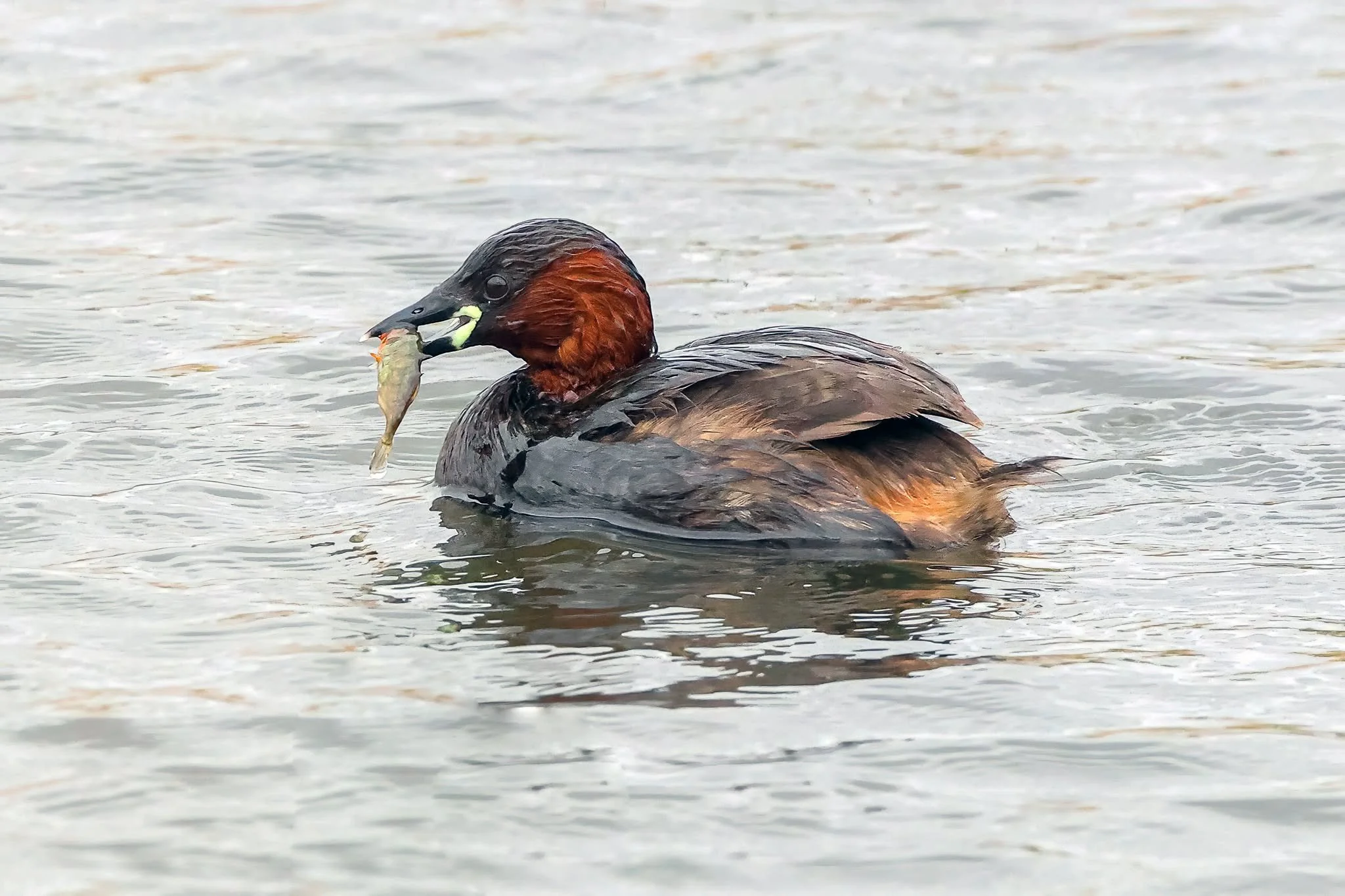
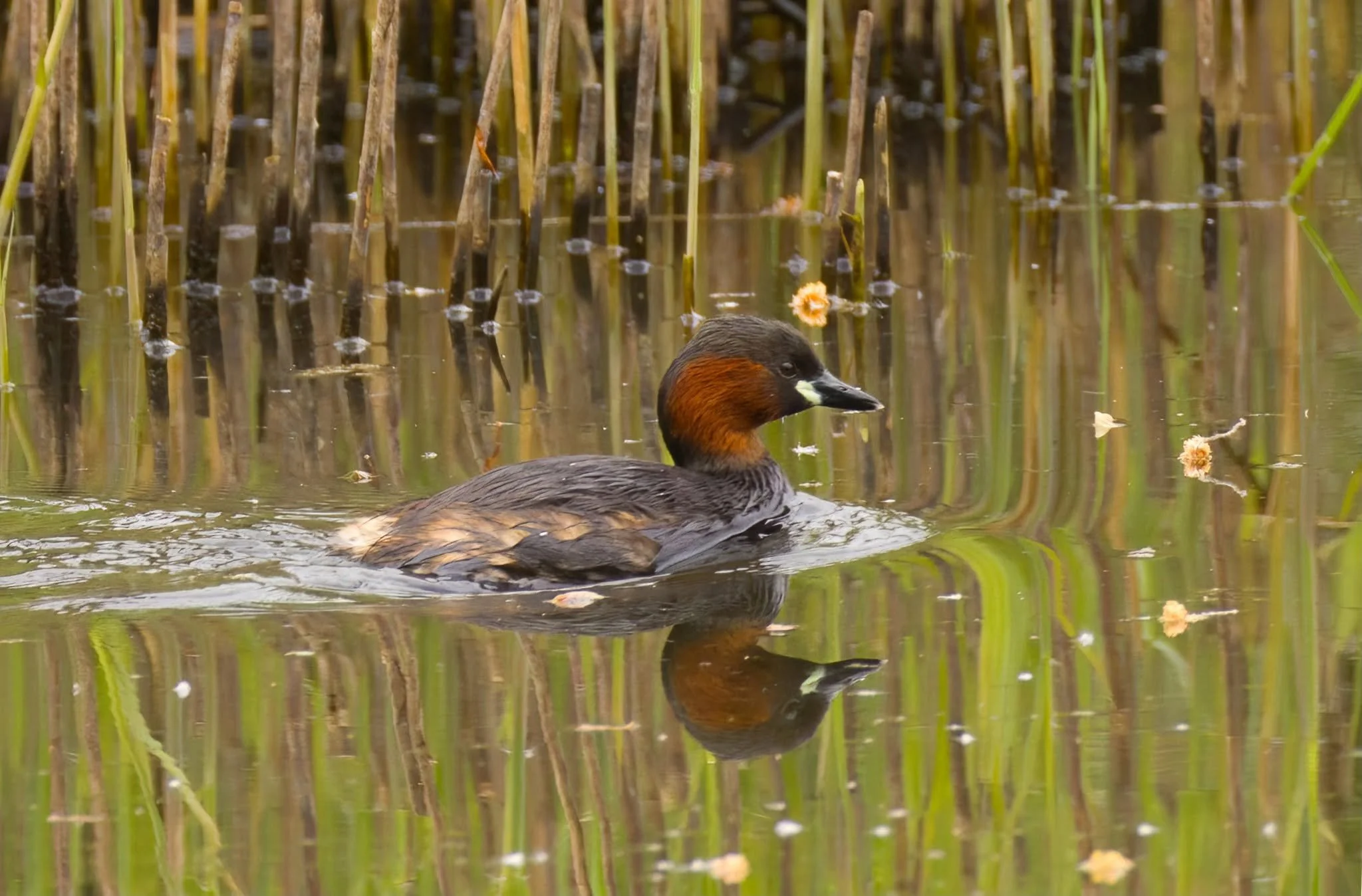
Top photo of a Dabchick taken by photographer Richard Styles, bottom photo of a Dabchick at Knypersley pool by Alan Tunnecliffe- the pool is directly fed by the River Trent, Richard and Alan are part of ST6 Photography Group.
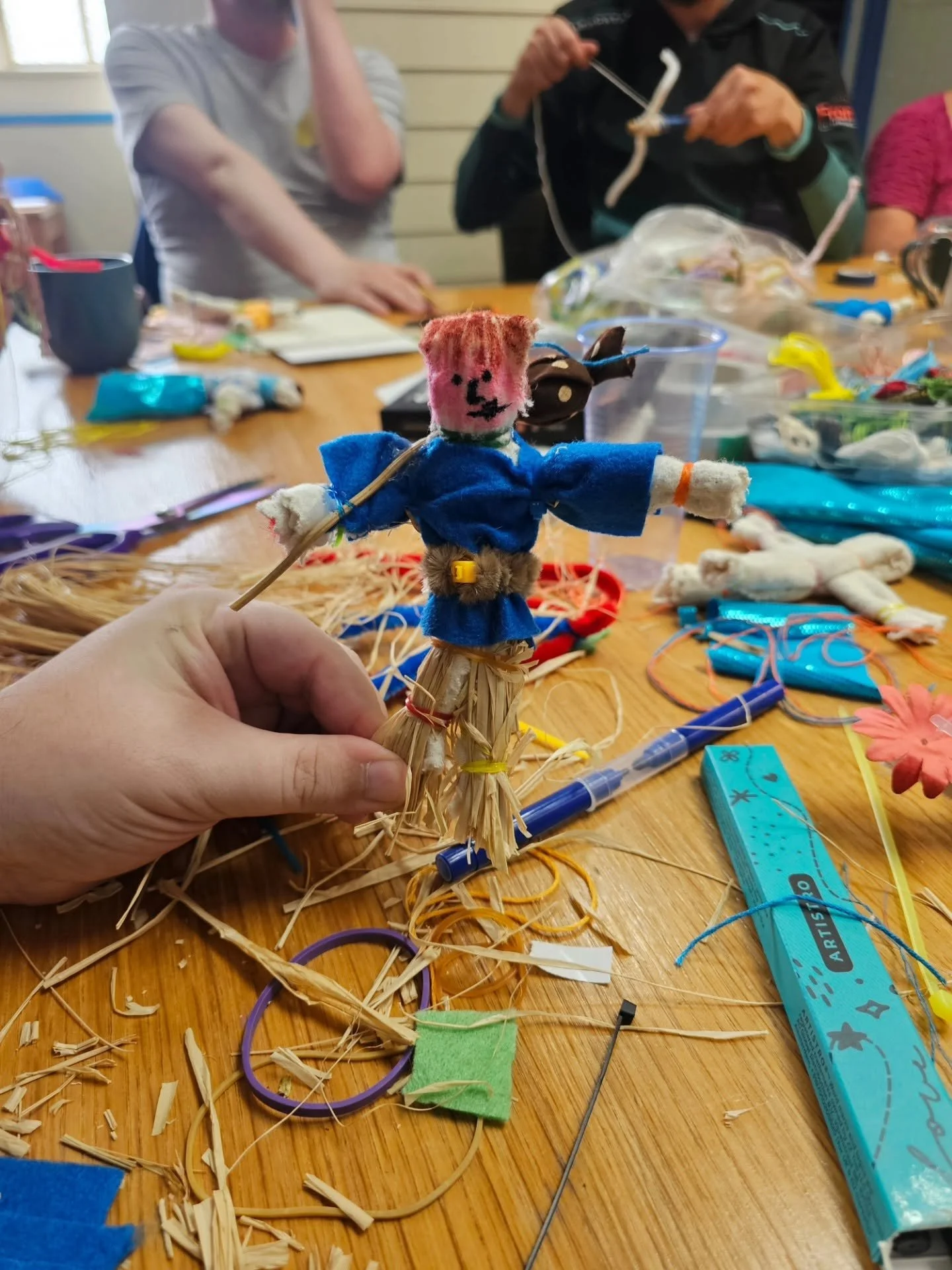
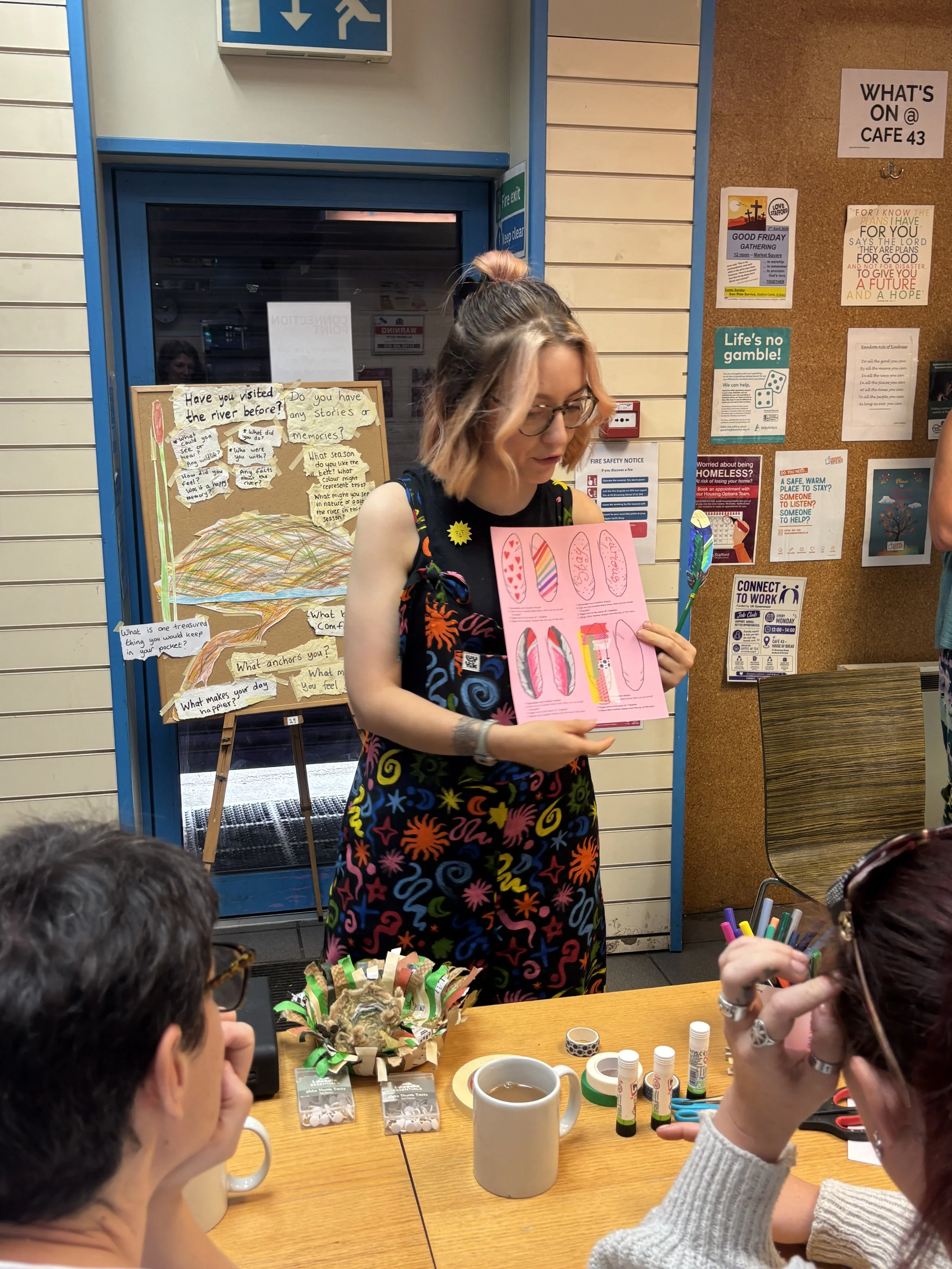
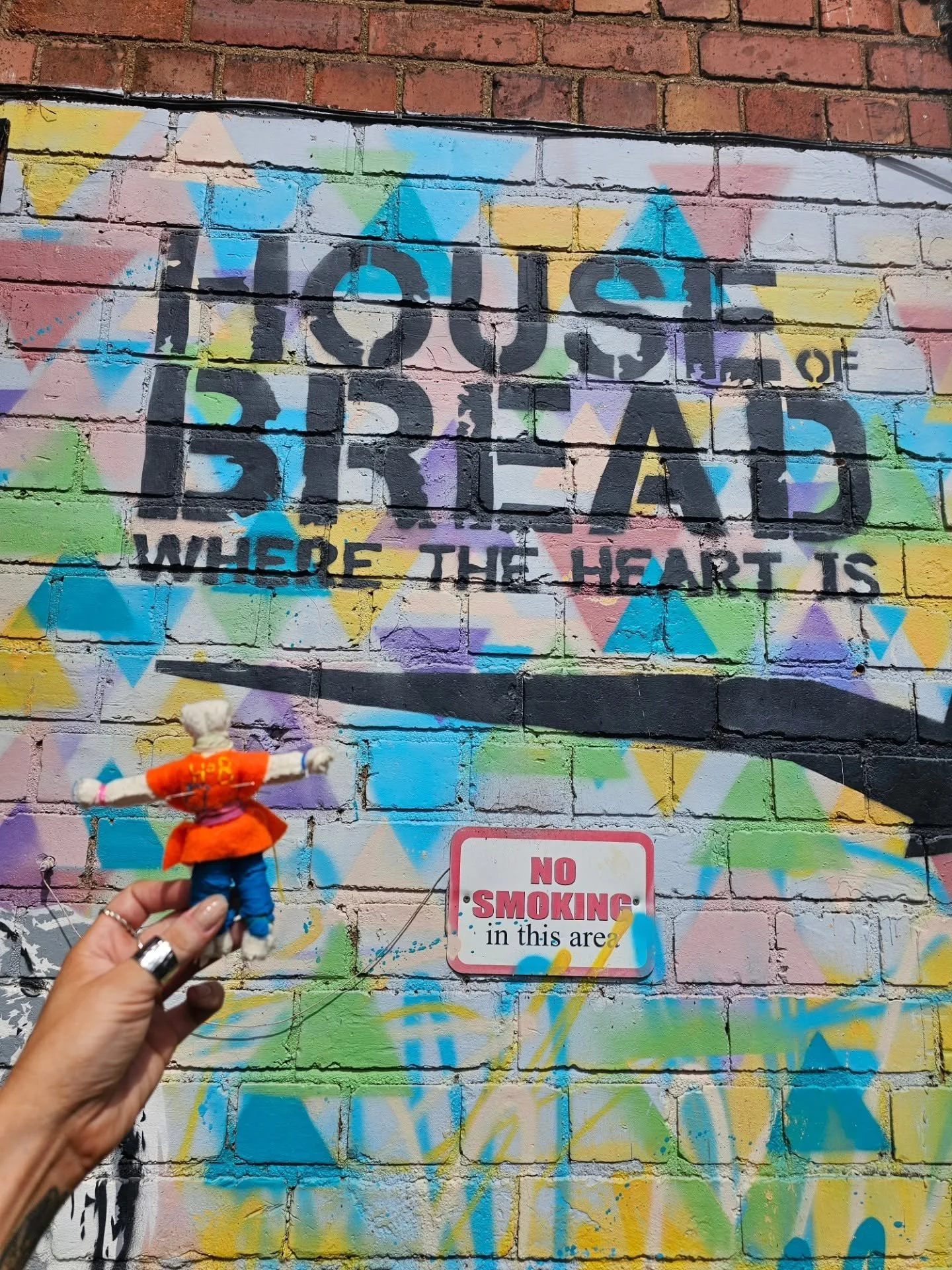
Fran explored these questions and themes with the crafty hands group at House of Bread in Stafford. Together they thought about things that help to make us feel safe or anchored and our own connections to the river, changing seasons and to nature. In the first session Fran was joined by artist Holly Johnson and the group created a selection of small mascots inspired by worry dolls to take away along with decorated pouches to keep them in. In the second session the group explored the themes in more depth - alongside designing their quills, creating mini-nests and taking part in sensory story telling with Esther Brennan and sharing their own stories of the area.
Workshops with House of Bread Stafford
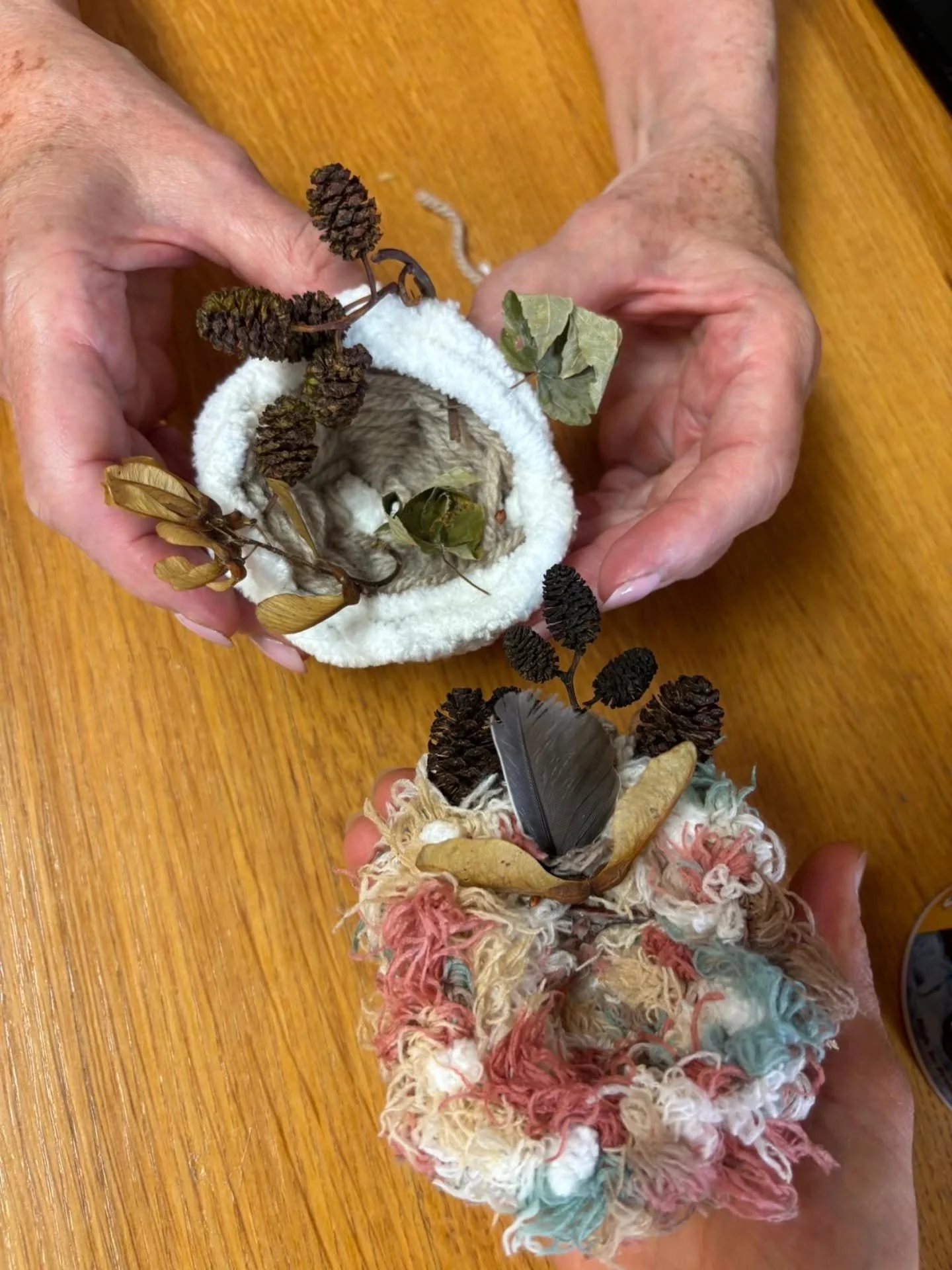
Nest building
research, gathering materials and testing ideas!
Grebe’s nests are usually made from floating vegetation and aquatic plants.
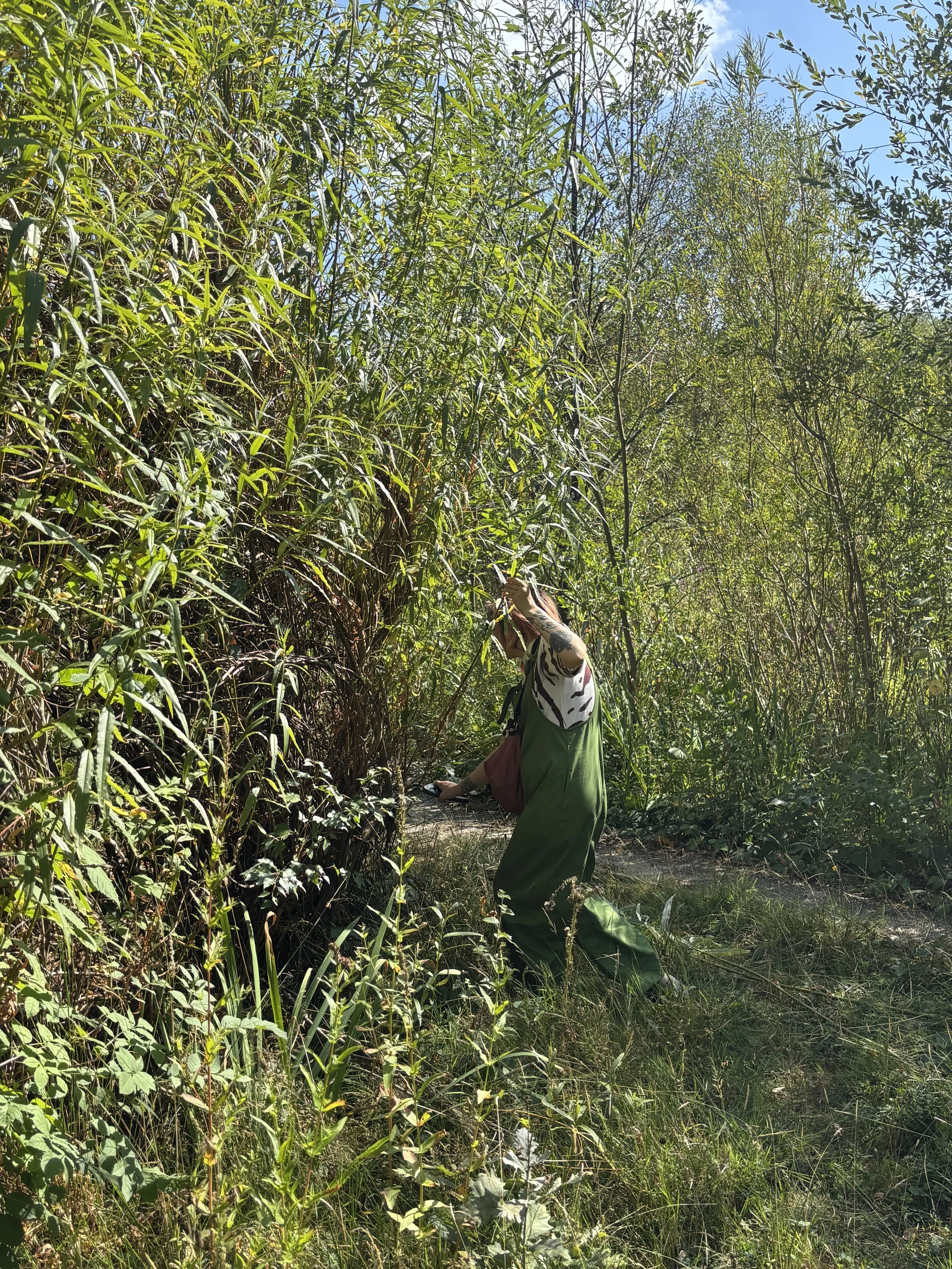
For longevity Fran decided to use green willow to weave the version you’ll find in the cabinet, along with some repurposed fabric. Willow species of course thrive next to water with native willow species, like crack willow and white willow, often lining the low-lying banks of the upper Trent as it flows through Staffordshire.
Fran harvested the green willow locally - with permission of course! And created a couple of moulds to weave around (one using rice wrapped in plastic, the other felt) to make the base. The willow will gradually change colour as the exhibition goes on, becoming less green - mirroring the way Dabchick’s also change colour seasonally.
“Grebe’s have perhaps unfairly been referred to as ‘ efficient if not very elaborate nest builders’….The birds dive for… material to build a floating platform which is securely anchored to waterside vegetation. They… shape into a flat cone” – Interesting Birds Nests and Eggs
Fran’s Little Grebe’s nest breaks this stereotype! It’s very elaborate!
Sourcing & creating items for the nest as a time capsule!
‘Trent Treasures’ items recovered directly from the Trent!
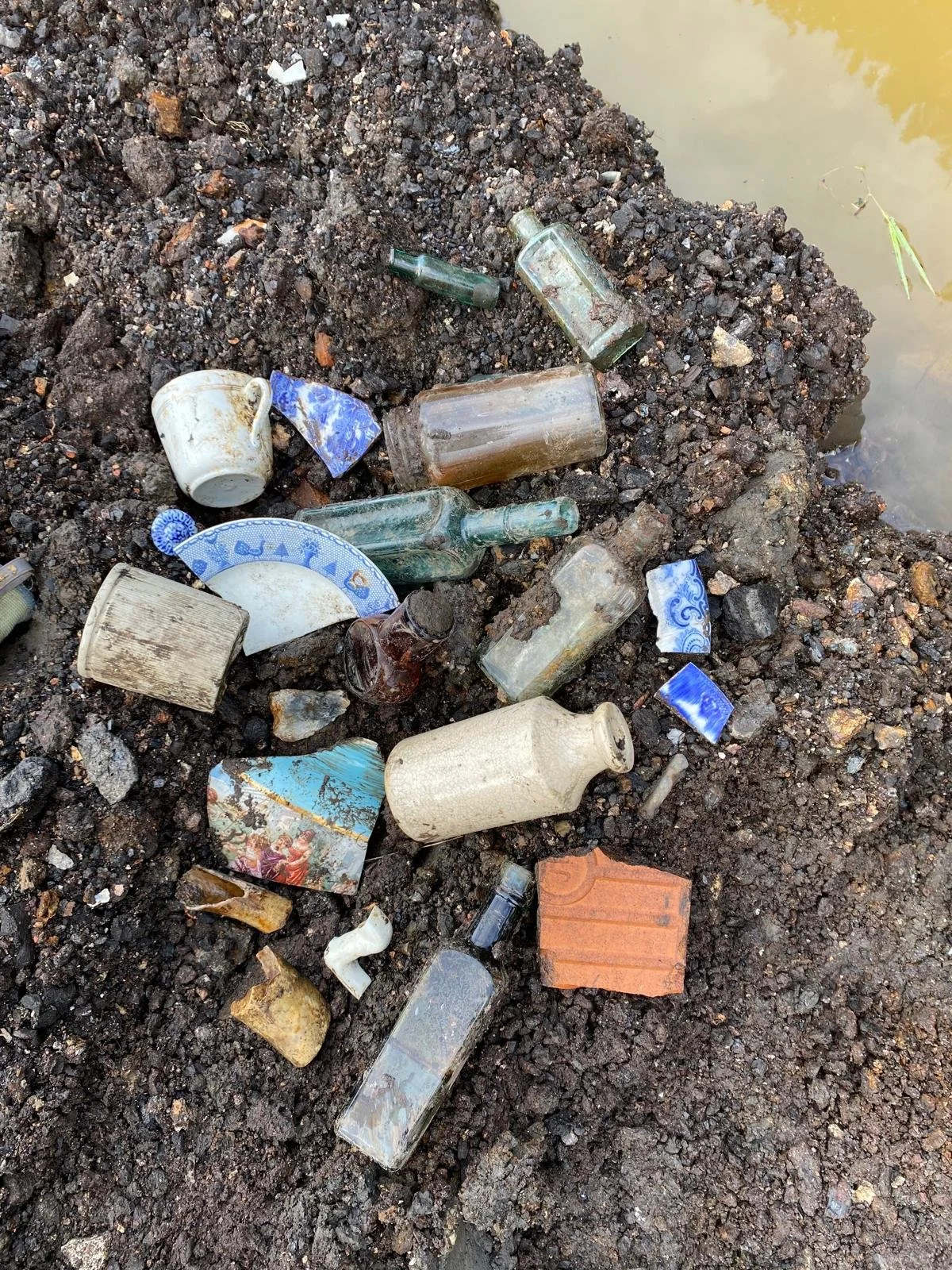
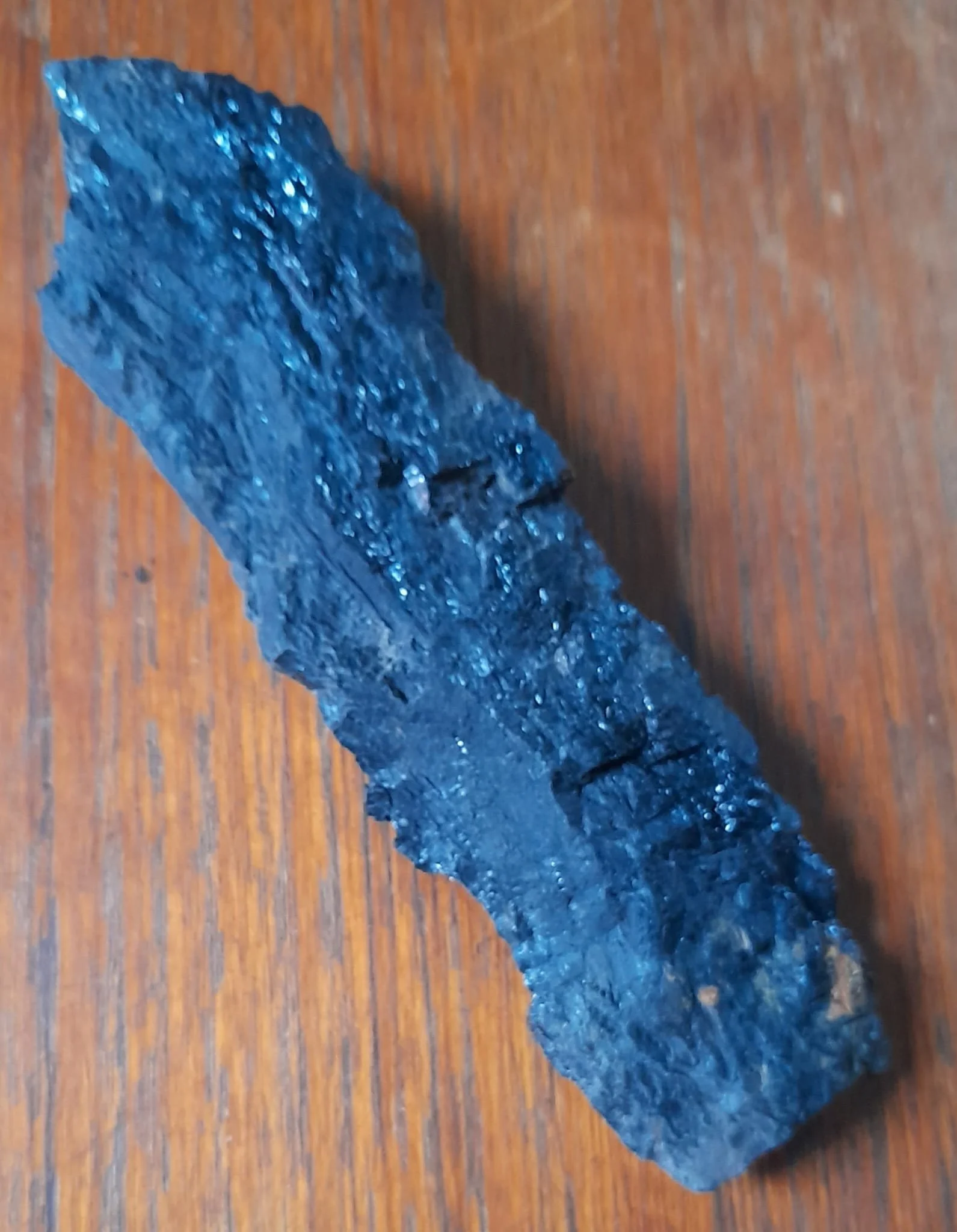
We were lucky to be working on the project at the same time as some wonderful restoration and improvement projects taking place along the Trent Valley…and team members from Staffordshire Wildlife kindly collected us some interesting river finds to add to the cabinet! Including vintage bottles, crayfish claws, driftwood, feathers, old animal bones, lots of pottery shards and a piece of coal - found at Bucknall Park (perhaps from Bucknall Colliery or one of the many coal fired kilns operating along the Trent right up until the 1960s). You’ll find some of these items in the nest - as well as in other parts of the Cabinet - so do look out for them.
Alongside the fantastic finds donated to us, Fran wanted to include items that helped tell the story of this stretch of the Trent as it flowed through Stafford…both well known heritage features of this part of the county - such as the Essex Bridge and Stafford’s shoe industry - and also some of the personal stories told to us during workshops. So she has also sourced some items of her own (including her own visits to the river). She also wanted to make sure the ecological story of the river was represented researching flora and fauna you may see on the Trent and recreating these as textile additions to the nest!
Objects to look out for in the nest!
An Antique Pack Horse Bell - The Essex Bridge is the longest remaining packhorse bridge in England. Built in the 16th Century and Grade 1 listed. It crosses the River Trent near Great Haywood, approx 100m downstream from where the Trent meets the River Sow. Perhaps one of the many thousands of horses that crossed the bridge carrying lost a bell in the river below that wound up in the Grebe’s nest!
Ceramic Fragments - found in the River Trent (donated to the project) - The potteries and the rivers heritage are very much intertwined “Etruria remained the home of Wedgwood pottery until 1939, when a new plant was opened at Barlaston, on the Trent a few miles downstream but still very much a part of The Potteries… This is a book about a river and not about pottery, but the first few miles of the Trent's long course cannot be considered in isolation from its unique industrial environment. Neither should the rest be considered apart from the canal that accompanies it for seventy miles…: a 'navigation' resulting directly from the needs of The Potteries and from the efforts of Josiah Wedgwood in particular”- Extract from ‘Portrait of the River Trent by Peter Lord
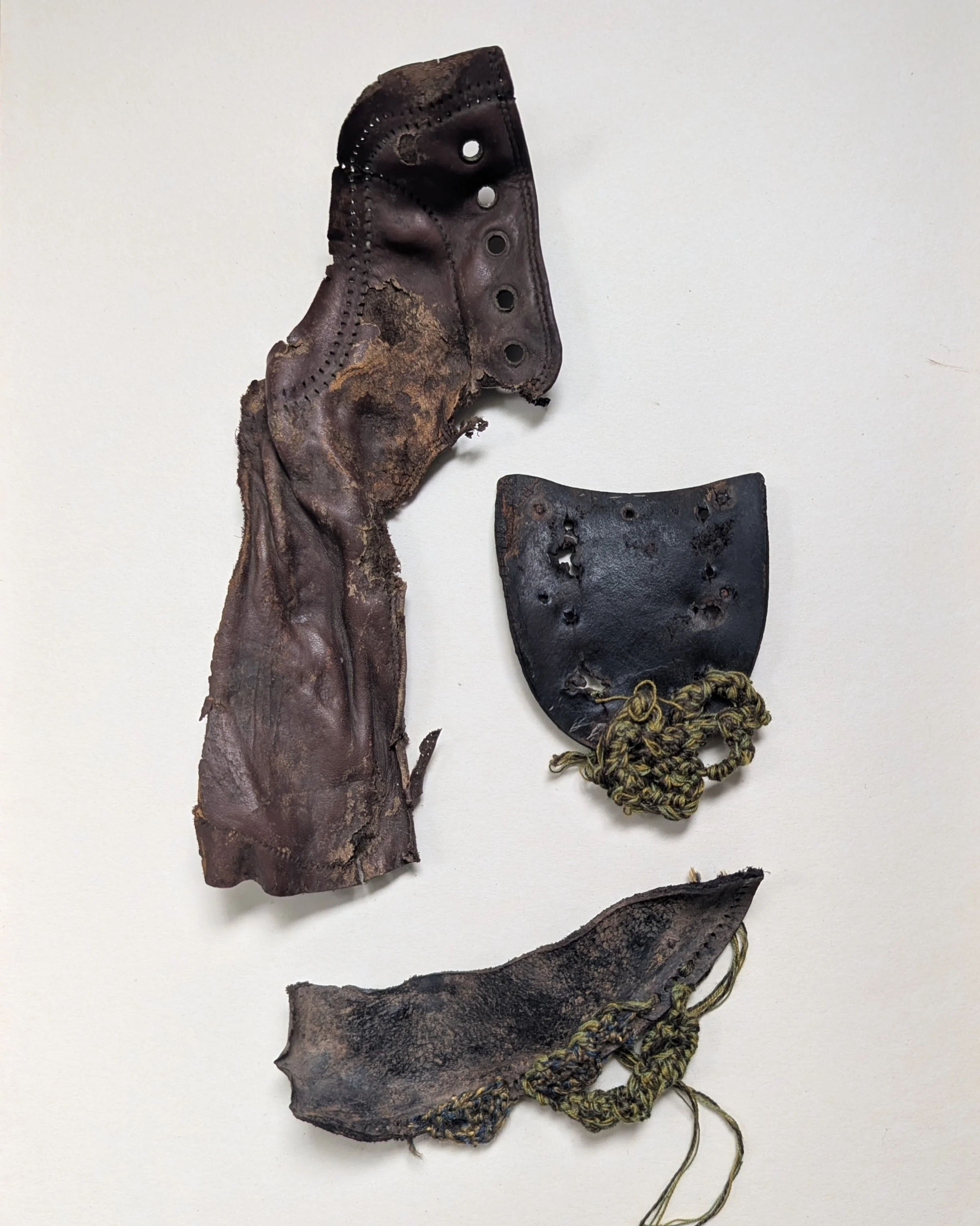
Pieces of old leather shoes — from Stafford’s famous shoe and boot industry
“…its major industry is concerned… with leather, more generally associated with Northamptonshire and Leicestershire yet clearly not out of place in the Trent valley area, which has provided rich grazing for cattle from time beyond record. Stafford has been famous for boots and shoes for hundreds of years, and in the eighteenth century the poet Richard Brinsley Sheridan-who used to stay at Chetwynd House, later to become Stafford post office-wrote: "May its trade be trod under foot by al the world." Extract from ‘Portrait of the River Trent by Peter Lord
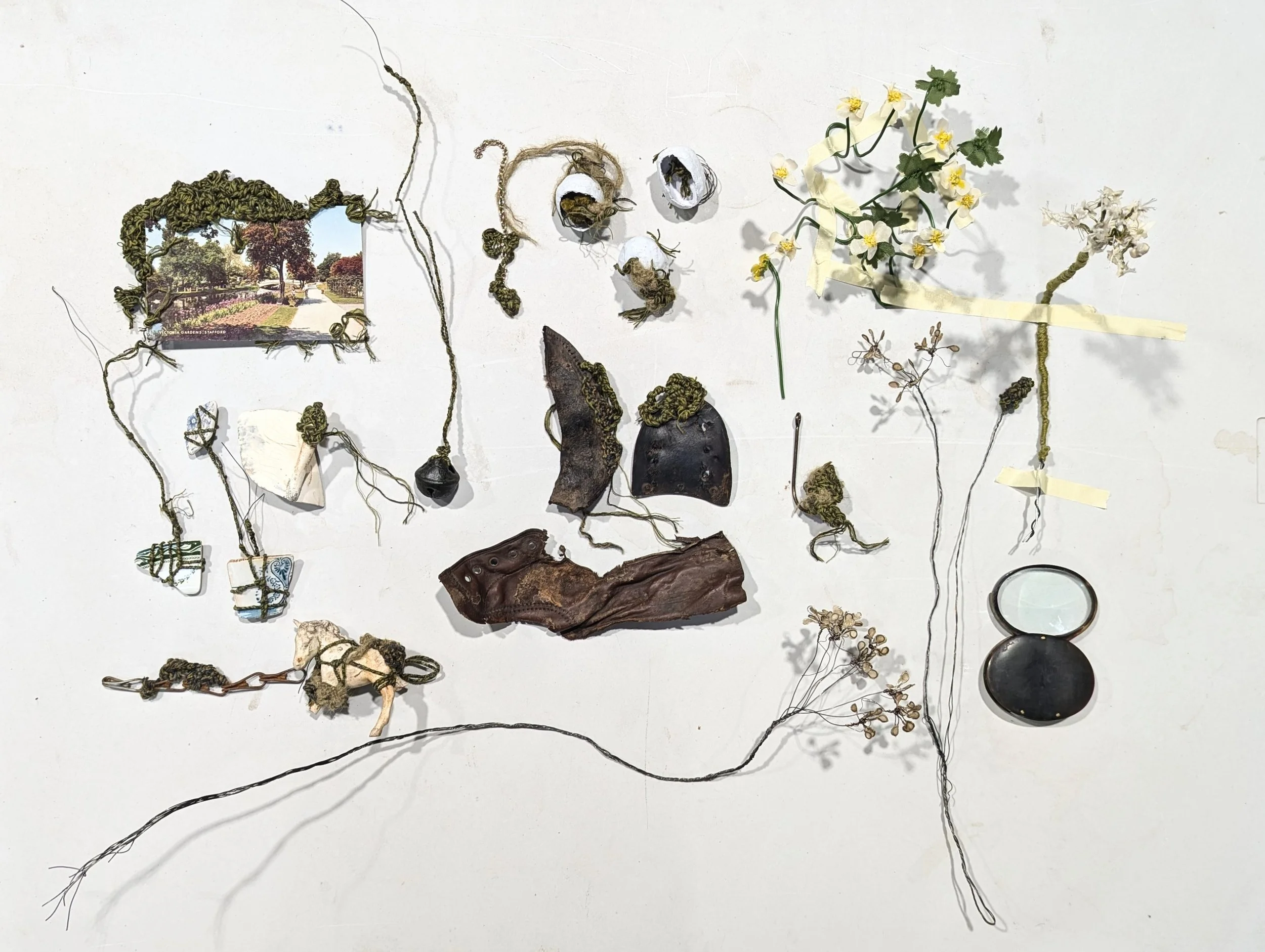
Flora/Fauna elements - made by Fran including:
Meadowsweet - Meadowsweet is a member of the rose family that favours wet habitats, such as ditches, damp meadows and riverbanks.
Buttercup (x1) as found on Doxey Marshes - an area mentioned many times by workshop participants as a place holding happy memories
Common water crowfoot (water plant) - can be seen covering ponds, ditches and streams, offers habitat for an invertebrates and provides refuge and cover for fish and other aquatic species.
Purple loosestrife – found in wet habitats like riverbanks. Its nectar becomes a valuable food source for long-tongued insects, such as brimstone butterflies, red-tailed bumblebees and elephant hawk-moths.
Plantains as found along pathway near to river bank
Seed heads as found along river bank
Egg shells within the centre of the nest– based on Little Grebe’s eggs. Little Grebes add fresh plant material to cover up the eggs. It has also been suggested that the fermentation helps provide warmth for incubation
Dried dandelion type flower as found along river bank
Branched Bur Reed - grows by the waters edge
There are also pink tones in the nest to represent the invasive pink/ green Himalayan Balsam which the artist witnessed being cut down along the river bank during one of her research visits.
Ceramic Horse - made by Beswick, the Stoke-On-Trent Pottery company, and found in the local area. Many participants talked about horse riding near the river. One of the workshop participants told us a story that always makes her smile when she thinks of the river…She was out riding and wanted to cross the river - using a very low and gently ford crossing, but her horse put one hoof in that flat out refused to go any further - so they had to go the long way round.
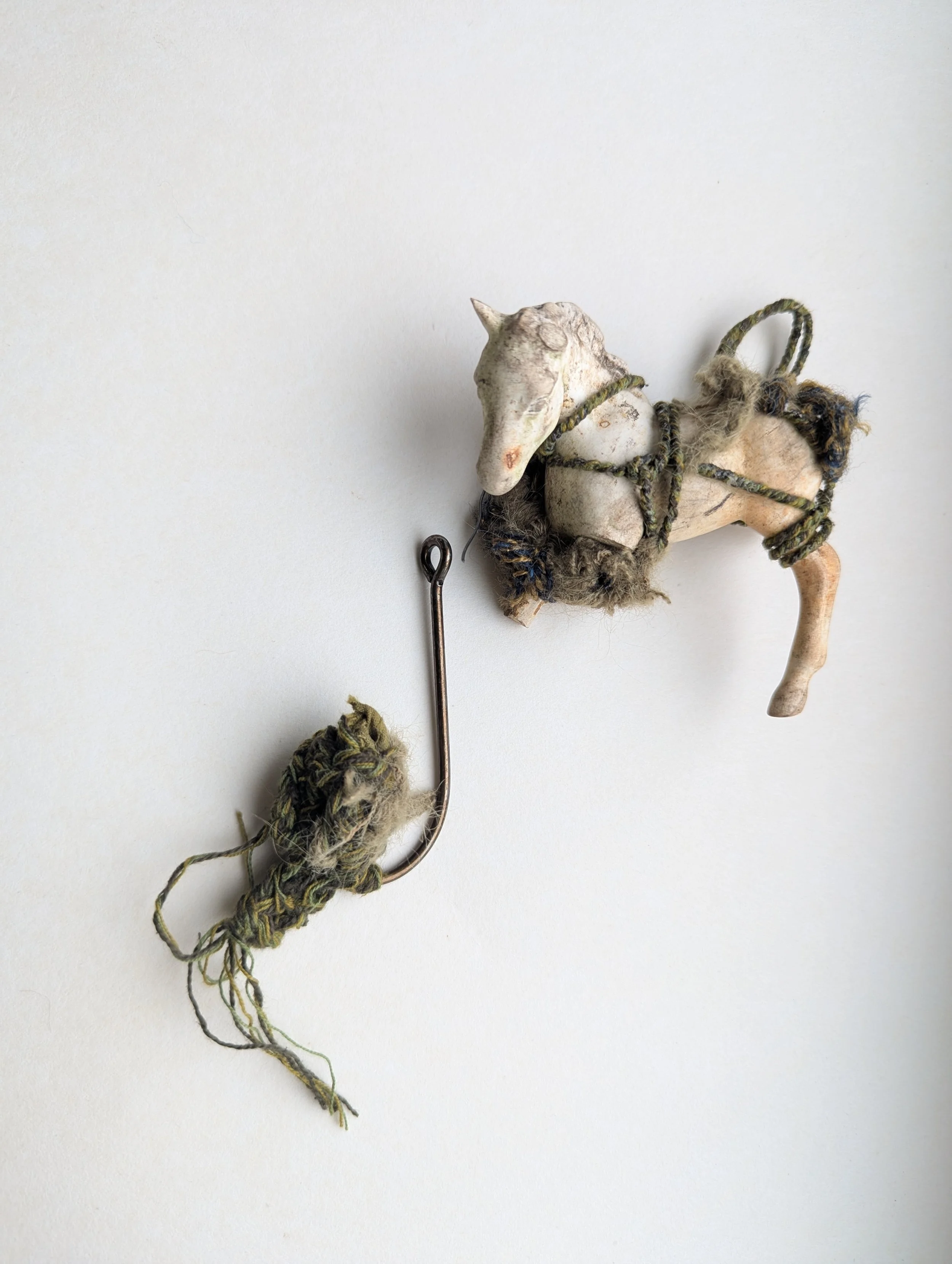
Fishing Hook - another happy memory that often came up for people was fishing on the river with family members. “I loved going fishing with my dad - when I think of the river that’s what I think of”
Metal Chains - representing metal debris and litter found in the river
Vintage Postcard of Victoria Park, Stafford, perhaps lost in the River Sow that runs through the park
The park in Stafford was originally opened in 1908 as Victoria Park, then known as the Victoria Park Pleasure Grounds. Stafford’s river is the River Sow (a tributary of the Trent) which flows through Victoria Park. Stafford grew as a market town and a hub for local trade partly because of the river!
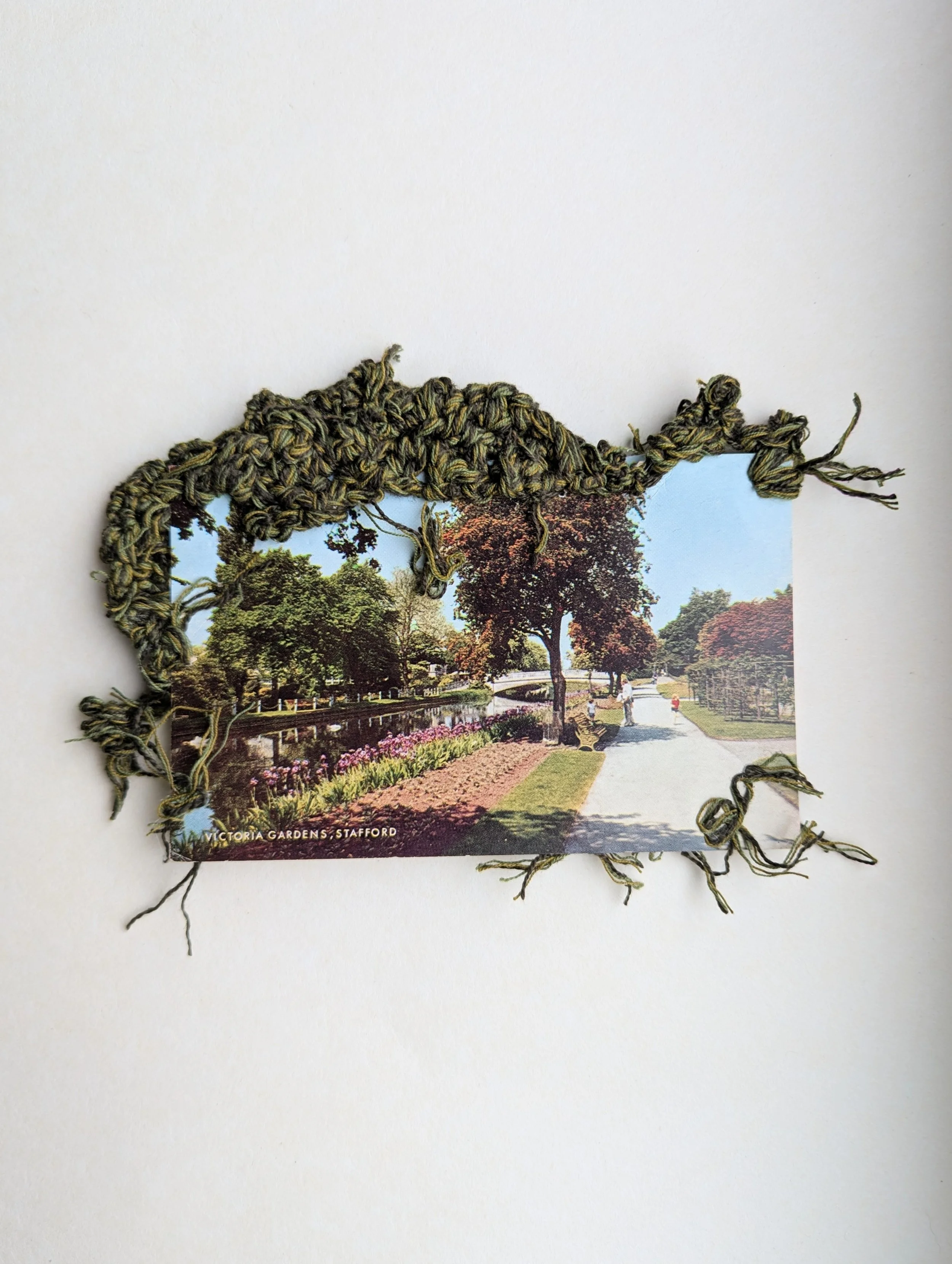
Message on back of the postcard - inspired by workshop conversations about the sensory and seasonal aspects of the river/nature. As well as thoughts on anchoring and sharing nature with loved ones, and for wellbeing “healing”
A piece of Flint — from one of the many mills grinding flint to be found along the tributaries of the Trent. A key ingredient in the pottery industry of the area. “The Trent is joined at Stone by a small stream flowing from a moated site at Hartwell Hall which in its four miles once drove half-a-dozen mills.
It is not unusual to find mills or their remains dotted at intervals along the tiny tributaries of the Trent, for water-power has since medieval times ben used to turn grinding stones… What makes this stream different…is the fact that the mills belong to a relatively modern times and were established to grind not corn but flint, the ingredient necessary to prevent the glaze on earthenware from cracking” Extract from ‘Portrait of the River Trent by Peter Lord
If you could add your own item to the nest to
help tell the story of the River Trent what would it be?
A big thank you to the Crafty Hands Group and all the team at House of Bread in Stafford for helping us develop ideas for this section of the Cabinet of Curiosities!
This project has been commissioned by Staffordshire Wildlife Trust, as part of the Trent Valley Past and Present Project. It is made possible with The National Lottery Heritage Fund, with thanks to National Lottery players.
Find out more about the wider project here: https://www.thetrentvalley.org.uk/projects/tvpp/