Making The Trent Valley Cabinet of Curiosities
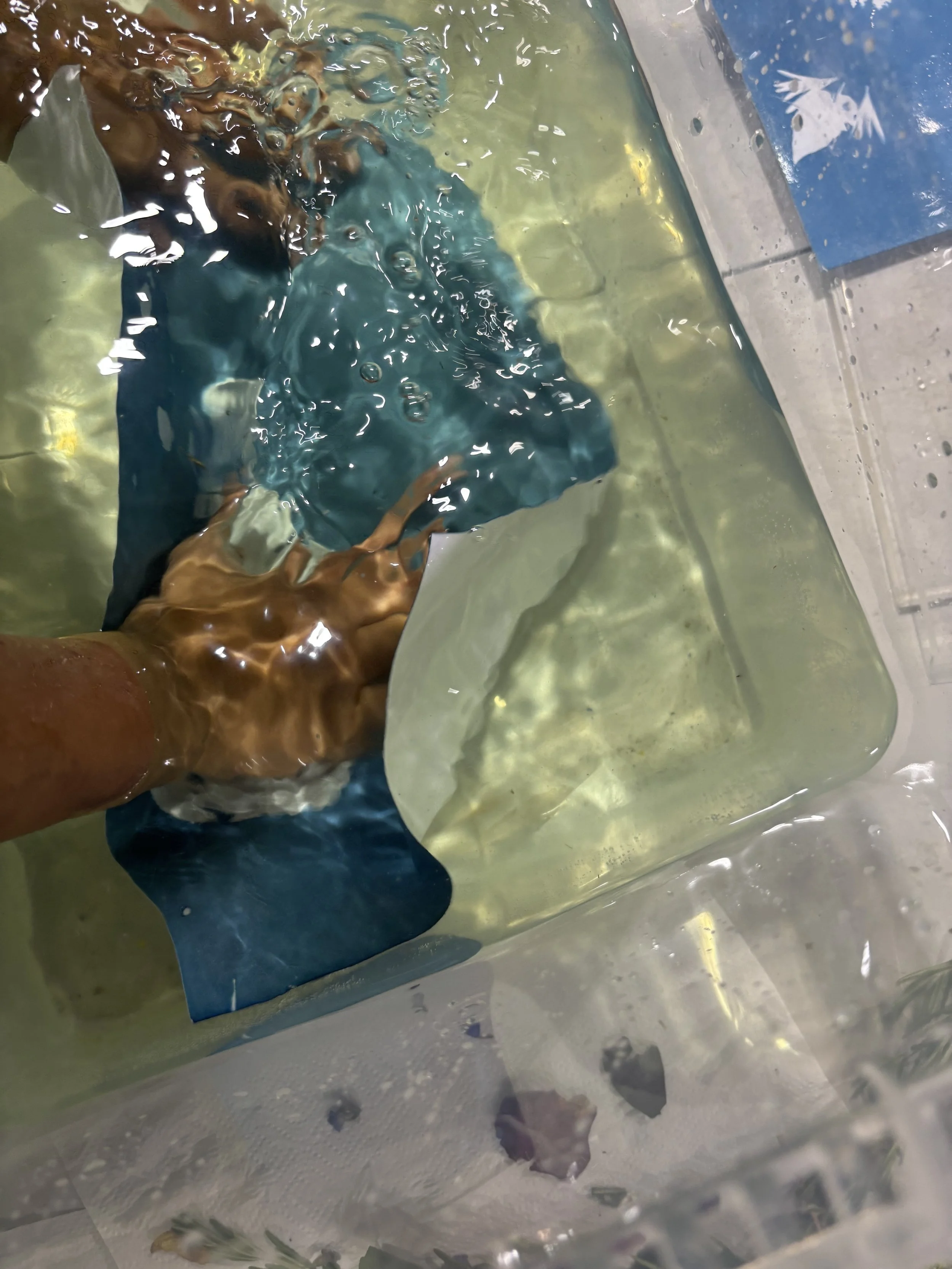
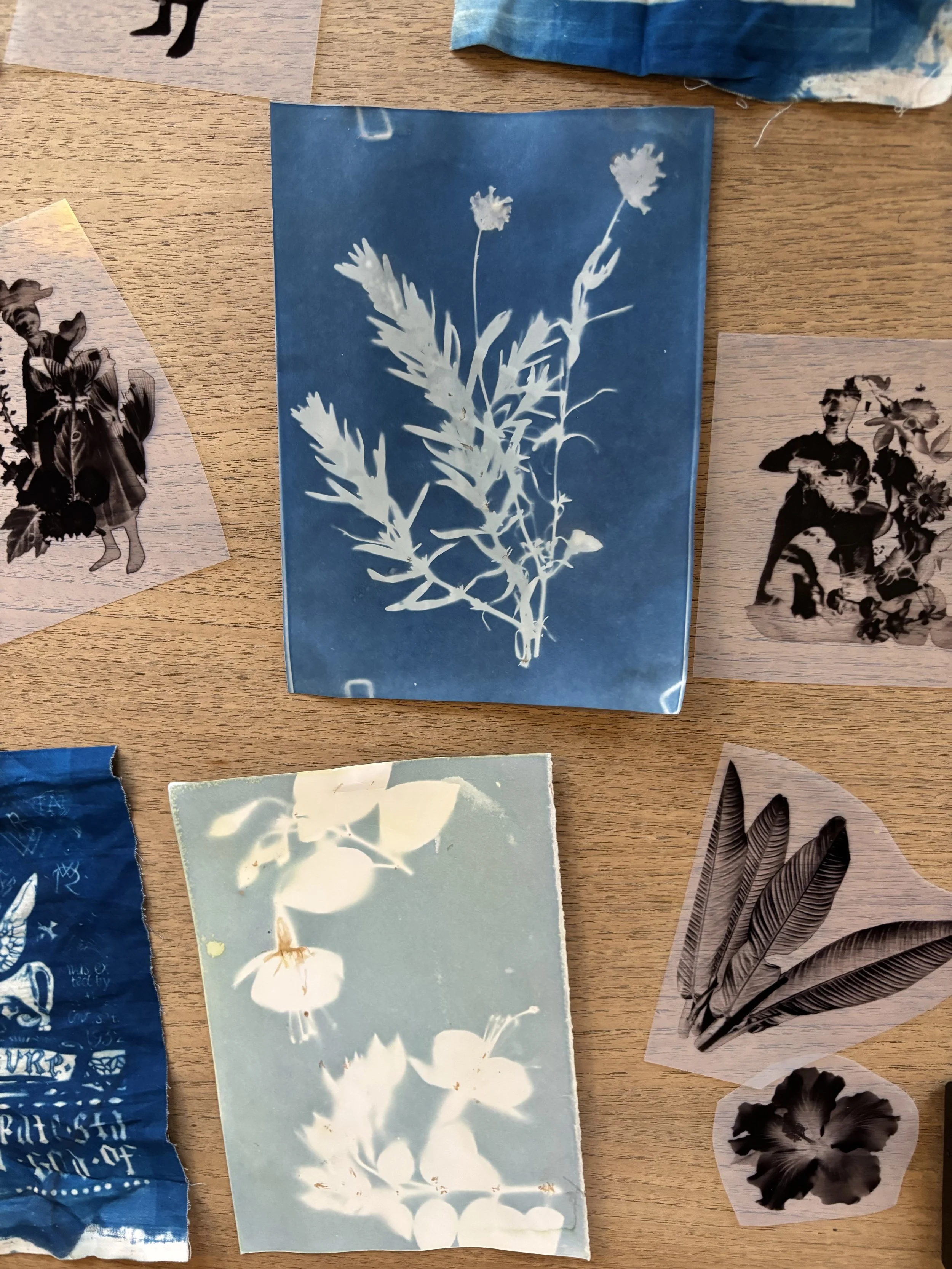
The following week the group selected some of their images transferred onto acetate sheets and used these alongside flora and fauna collected during the river visit to create cyanotype prints.
You’ll find some of the cyanotypes created by the group within the Cabinet. Alongside a recipe for making cyanotype prints using natural materials … if you find yourself by the river and want to keep your own record of the strange creatures you find there!
Building the case of the mysterious Trent Cryptid
Following the workshops Holly continued to develop the group’s ideas. Her story centres on a person who is investigating strange sightings and unusual occurrences along the river, including creating cyanotype images of what they have observed. As they carry out their investigations they begin to realise that they themselves are changing. In the cabinet you will find their desk - along with some of their research about these sightings and occurrences….and some clues as to what may be happening to them.
Stories of Transformation - river sediment into art materials with Sasha DeWitt
Sasha DeWitt is an artist and natural pigment maker based at Acava Studios Spode (Stoke)
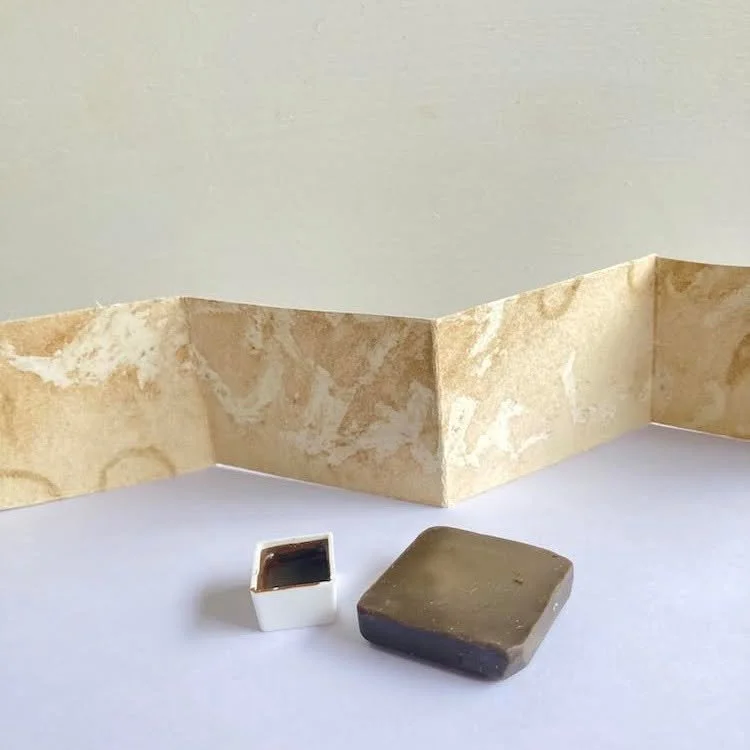
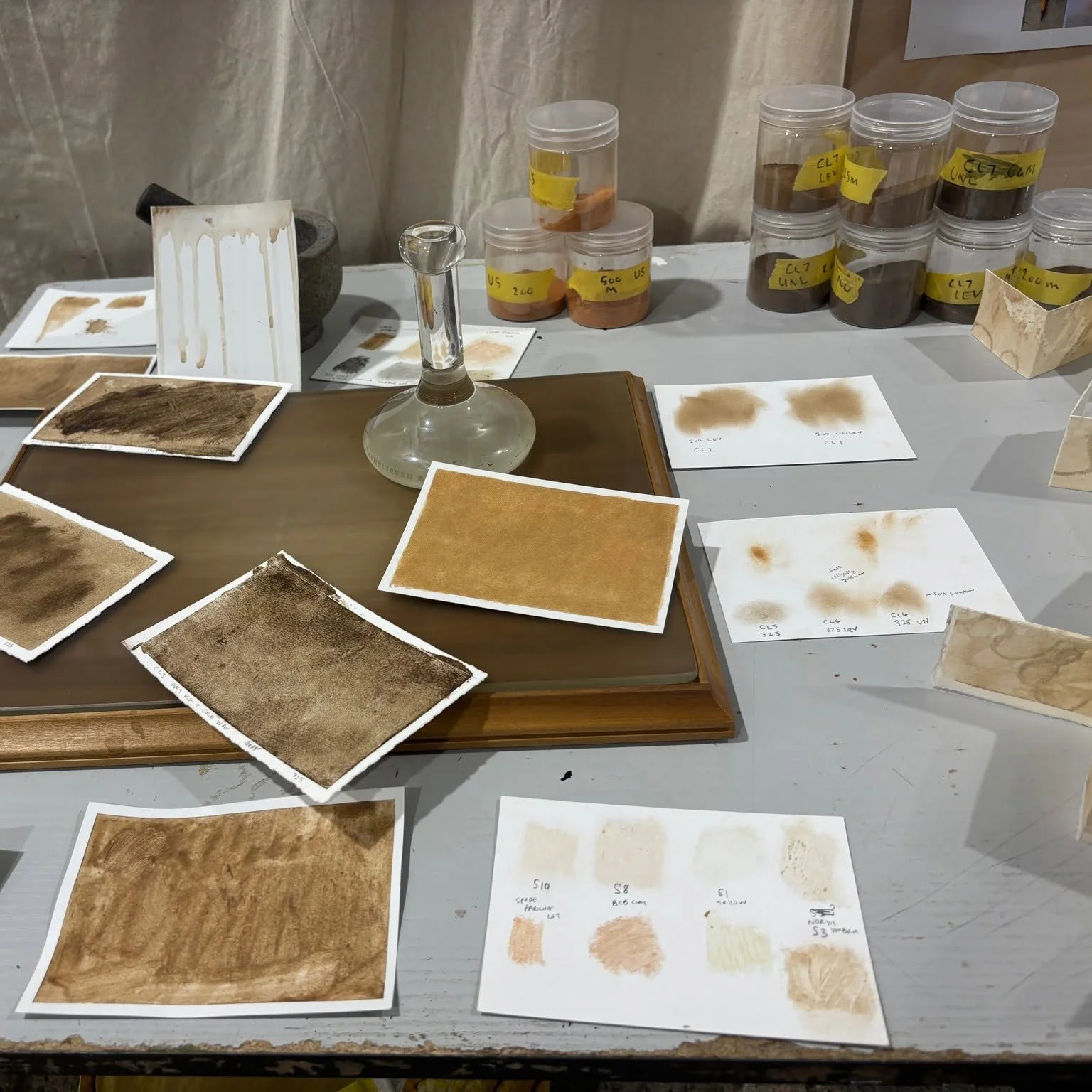
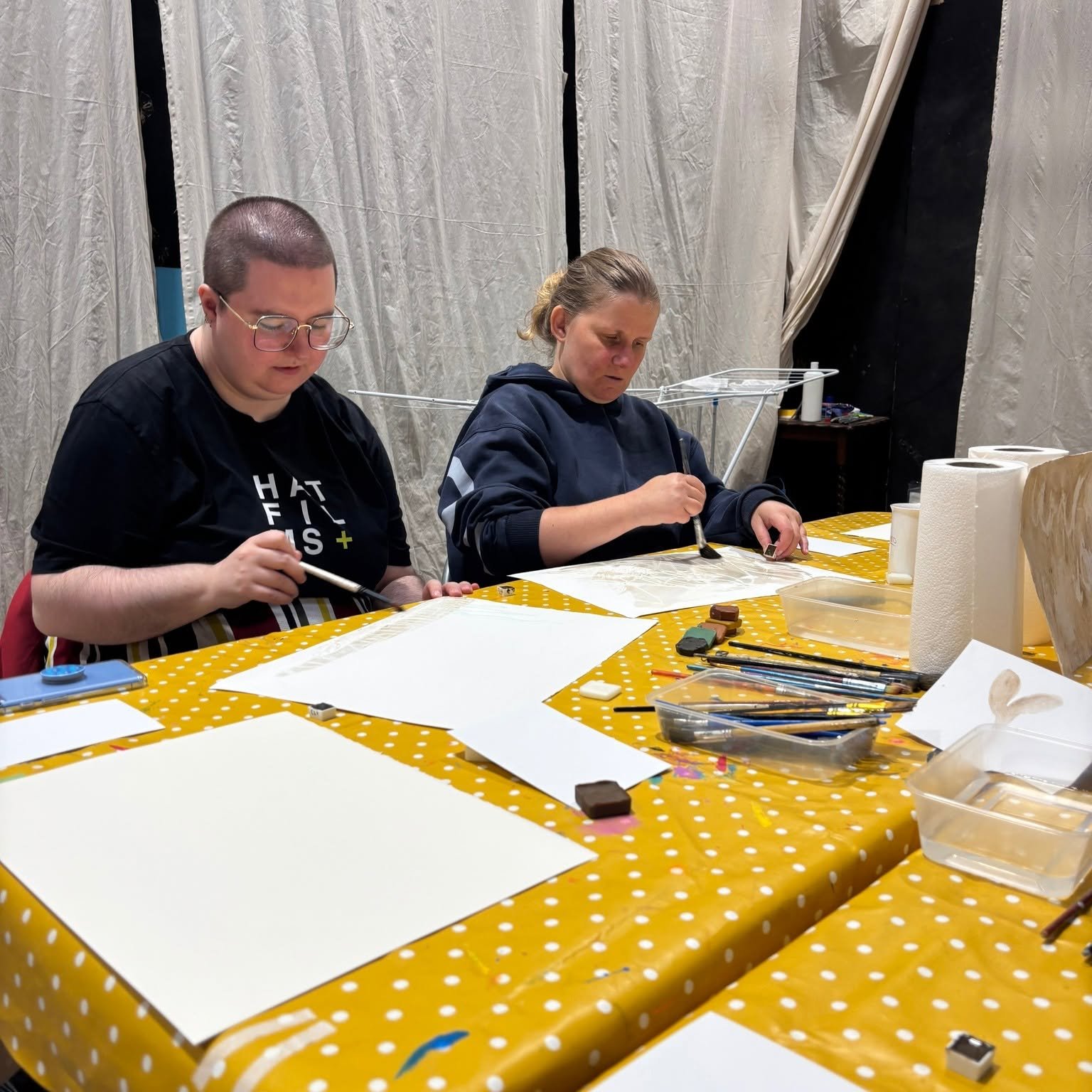
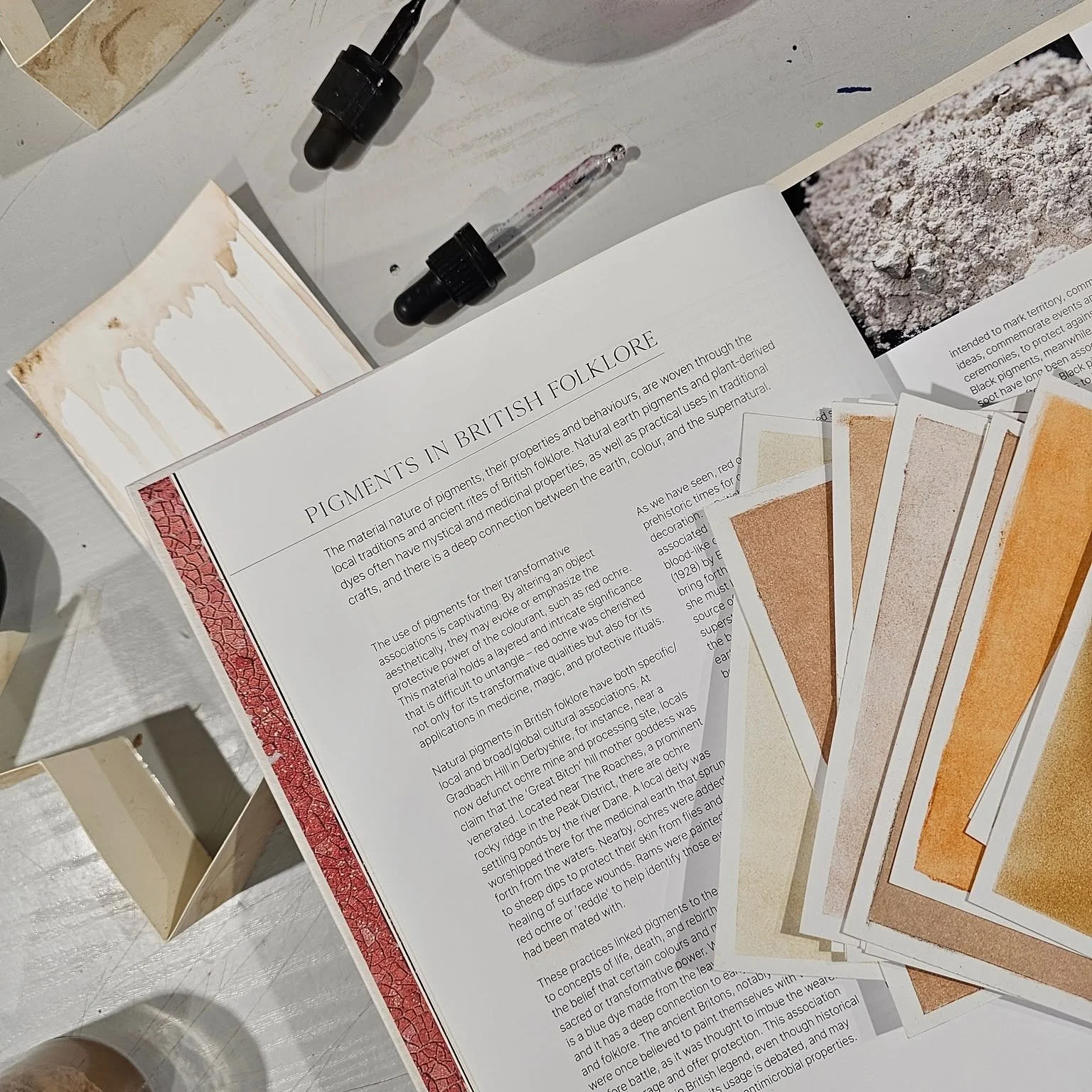
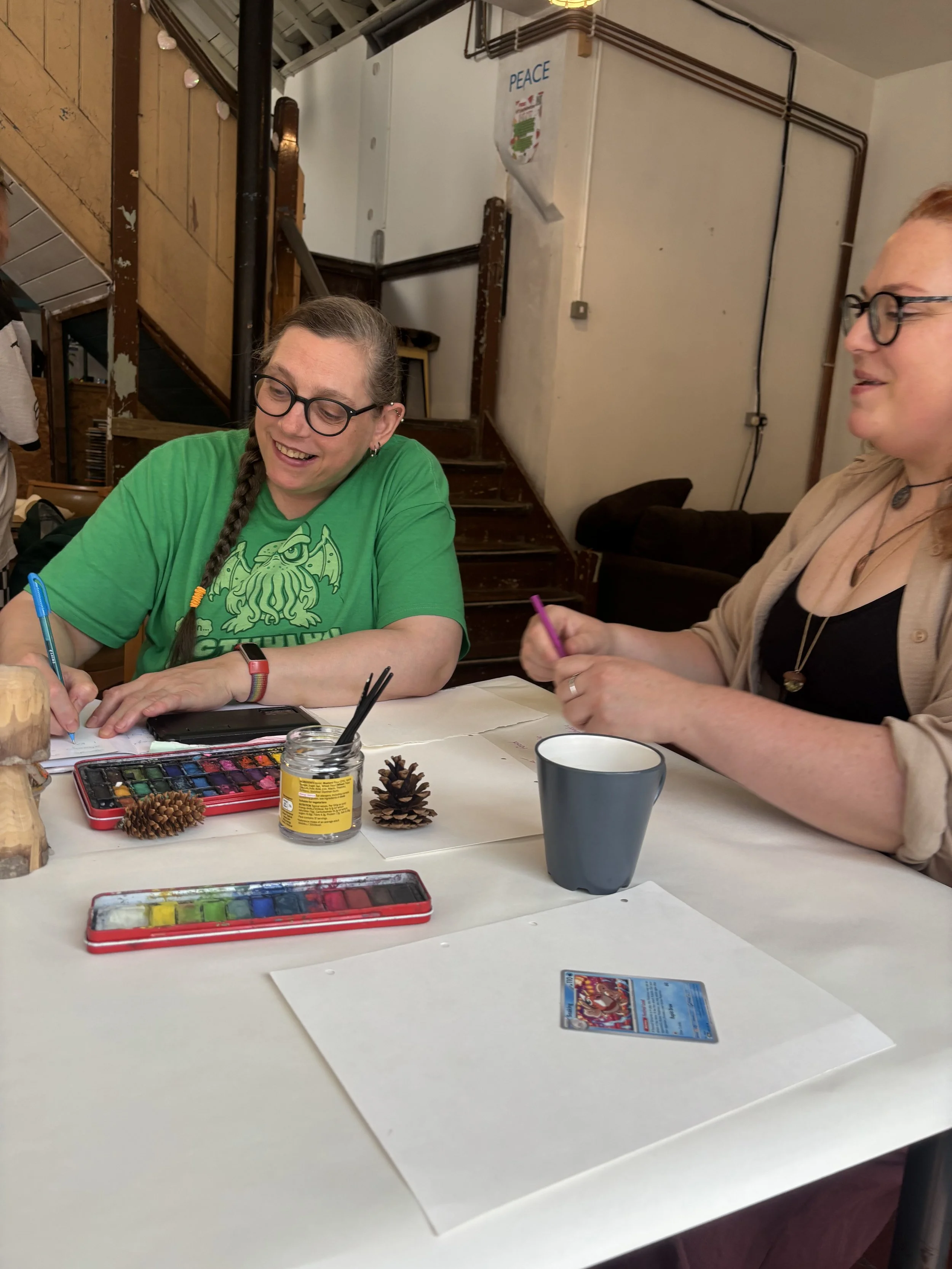
She is currently on a R&D project ‘Waste Stream and Locally Sourced Pigment’ including experimenting creating paint and crayons using sediment from the River Trent. As part of the Cabinet of Curiosities project Sasha ran a public workshop at B. ARTS in Stoke sharing information about how she creates pigment and inviting participants to paint, draw & experiment with watercolours, crayons and oil paints made from sediments and clay collected from the banks of the River Trent.
You’ll be able to find one of Sasha’s River Trent' crayons and have a go with it yourself, within the desk section of the cabinet.
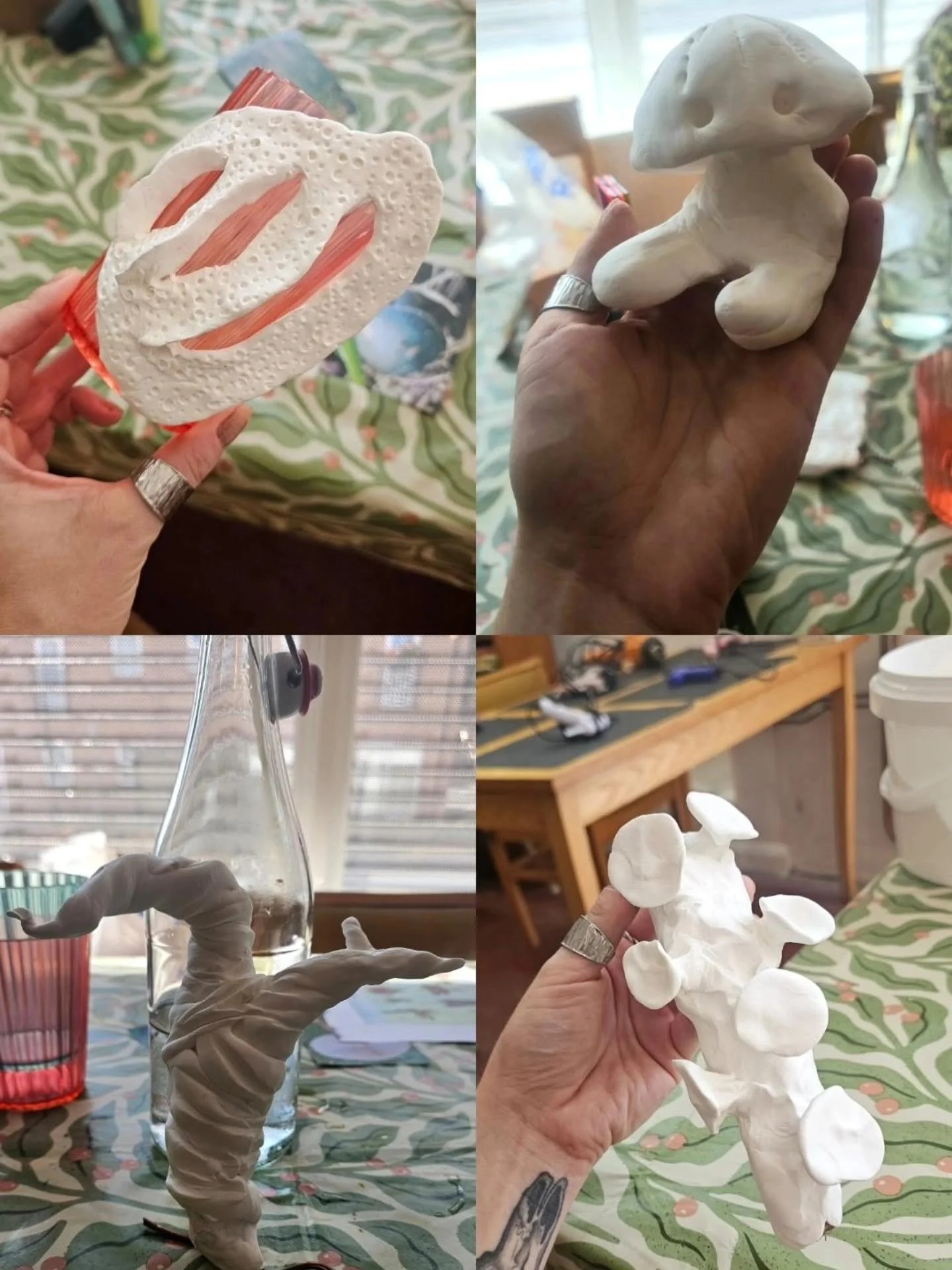
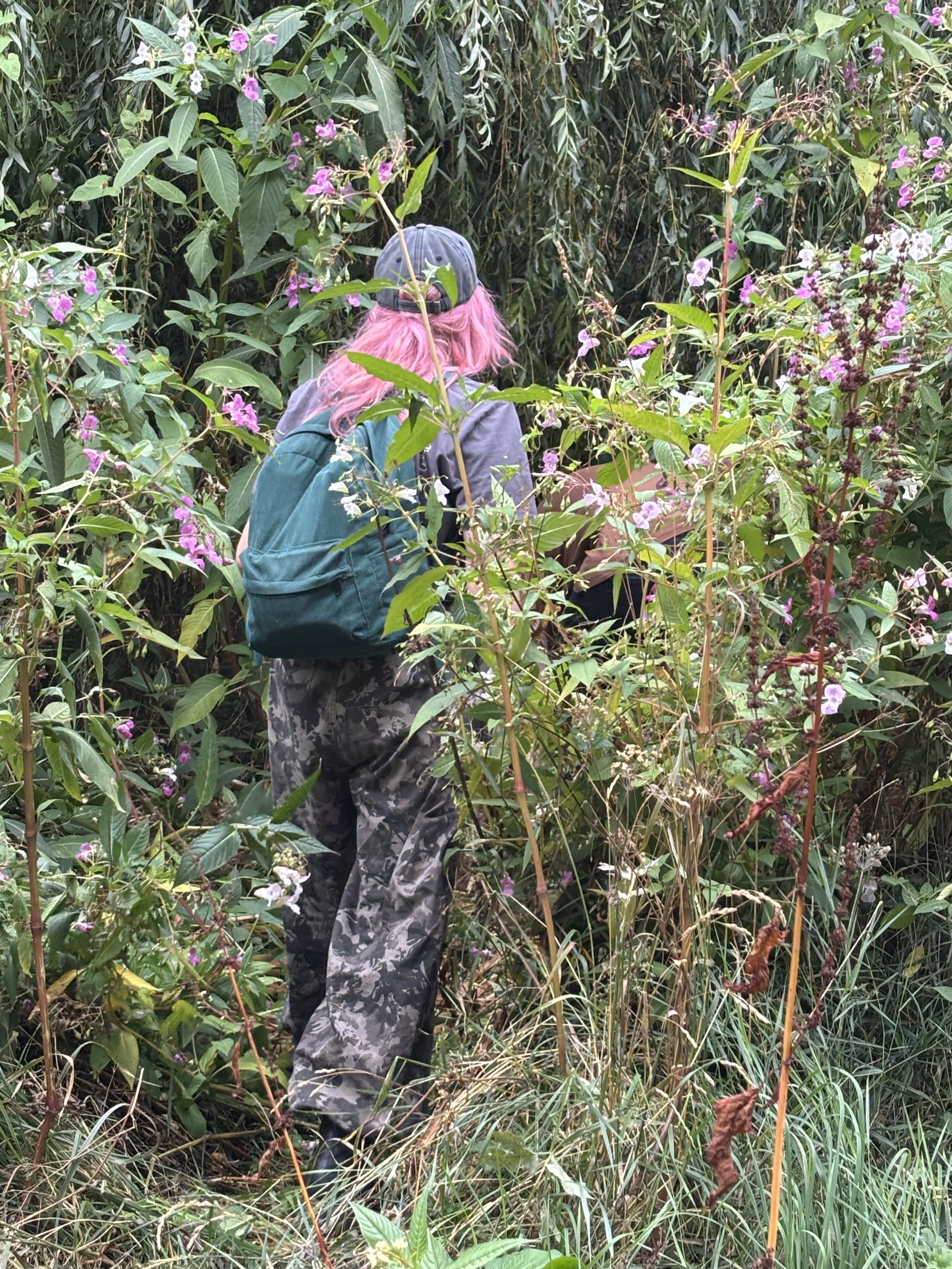
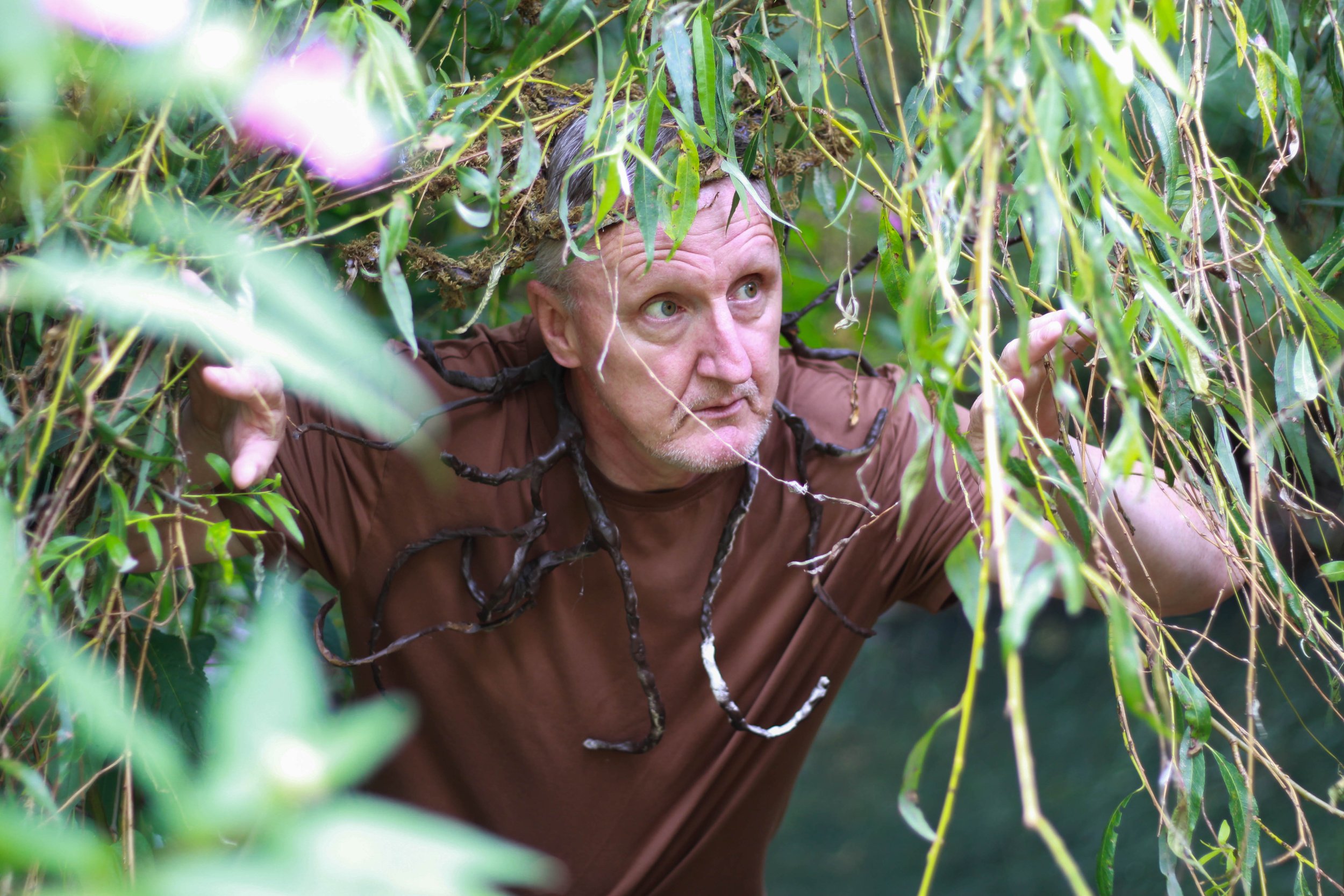
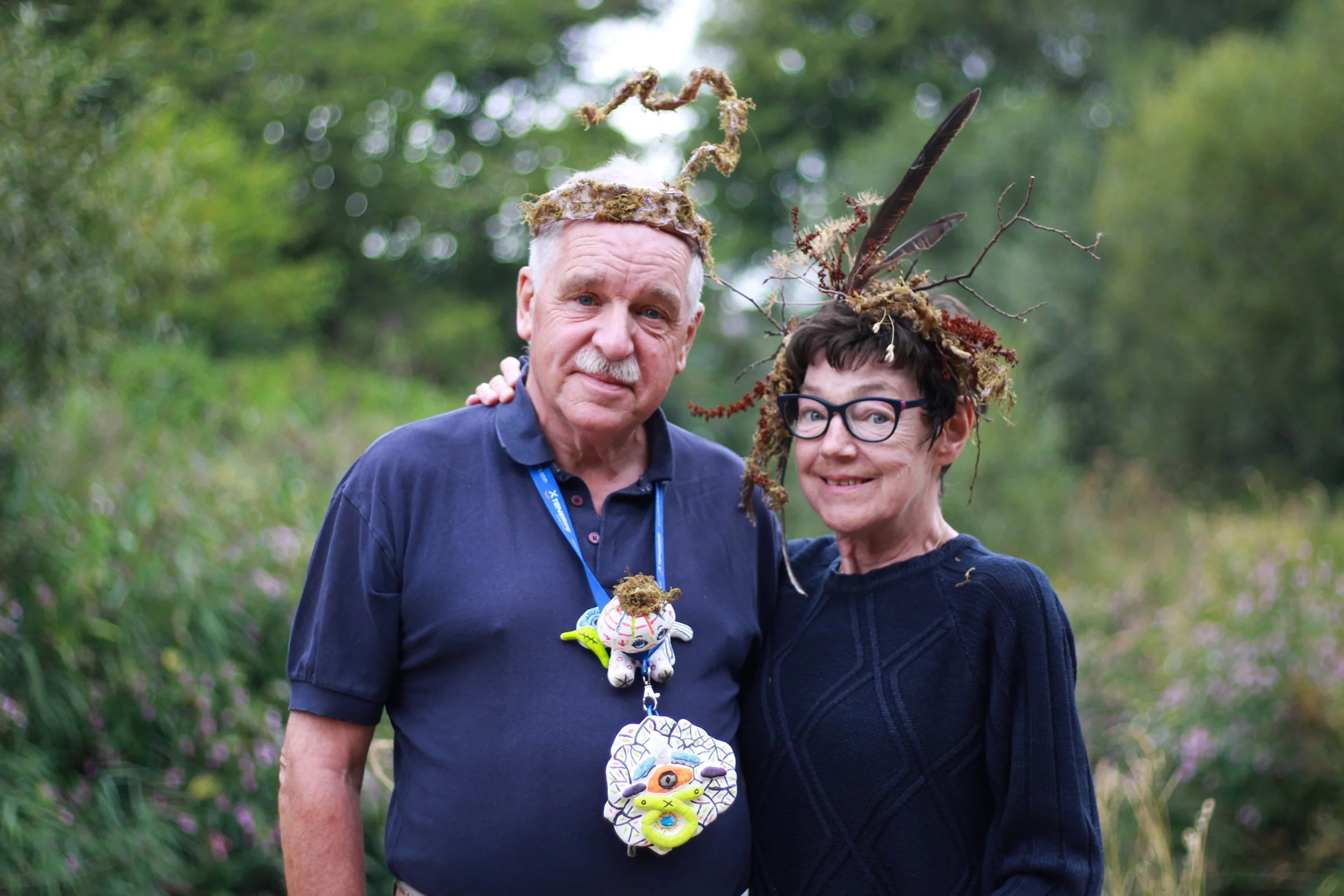
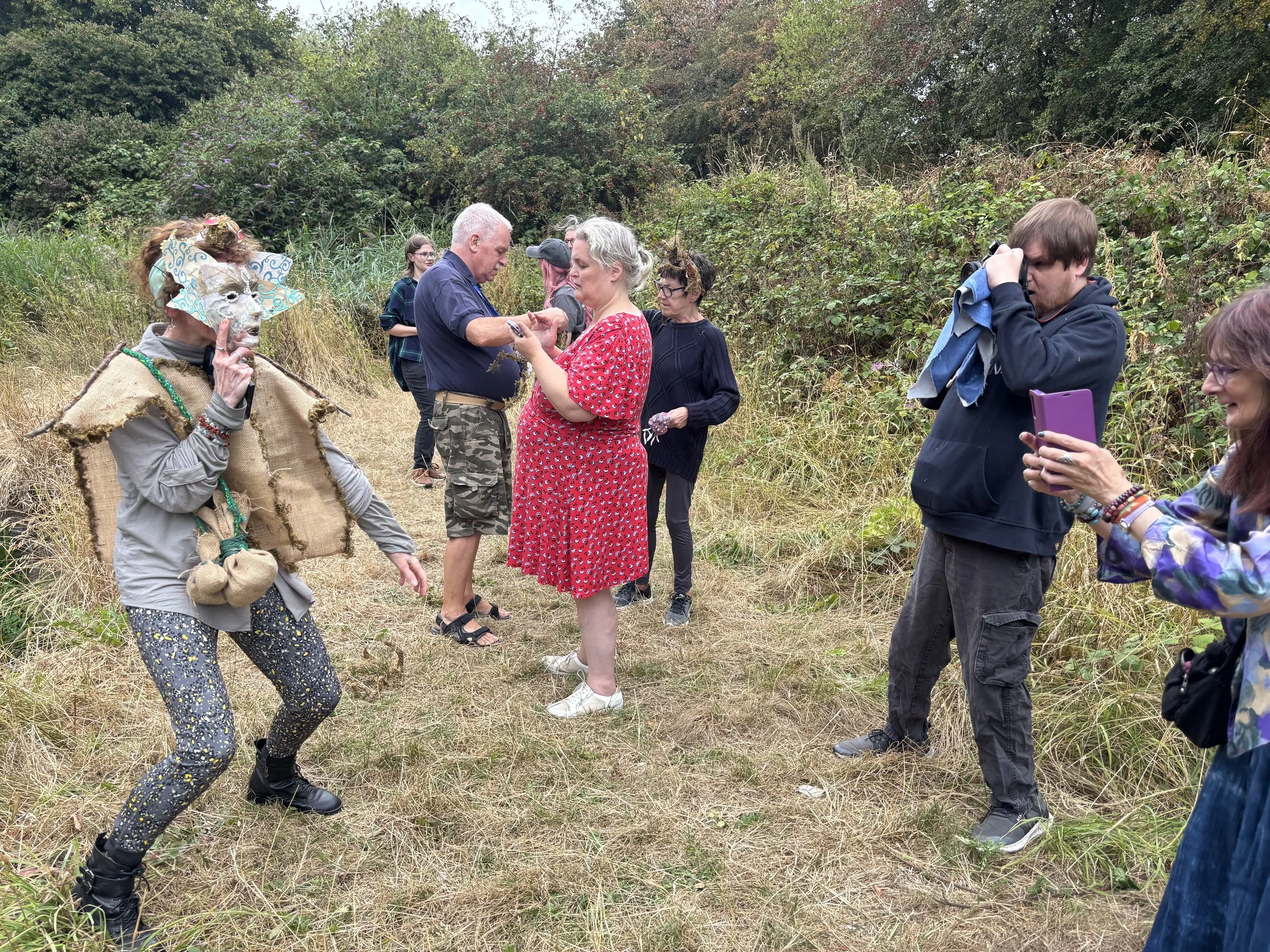
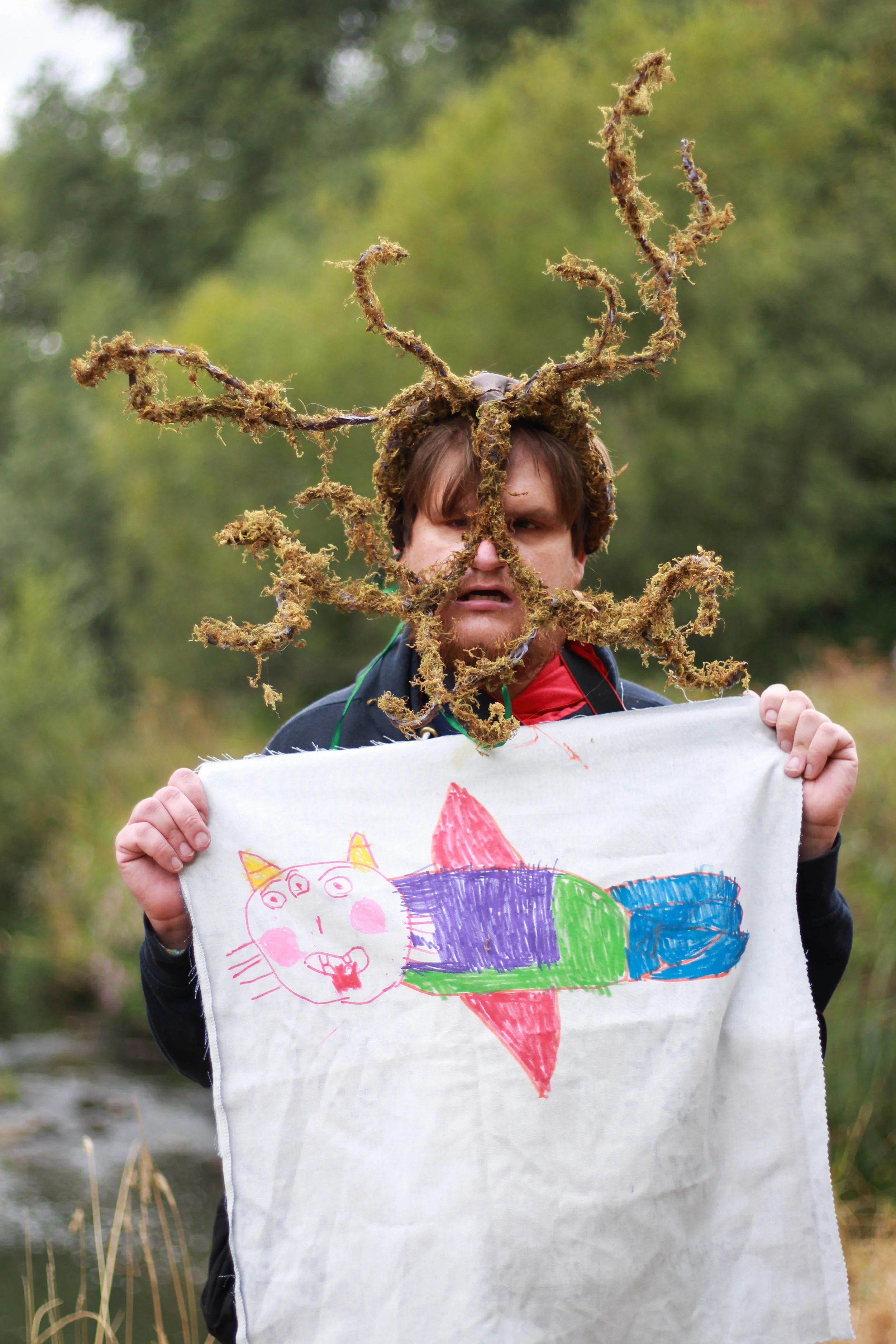
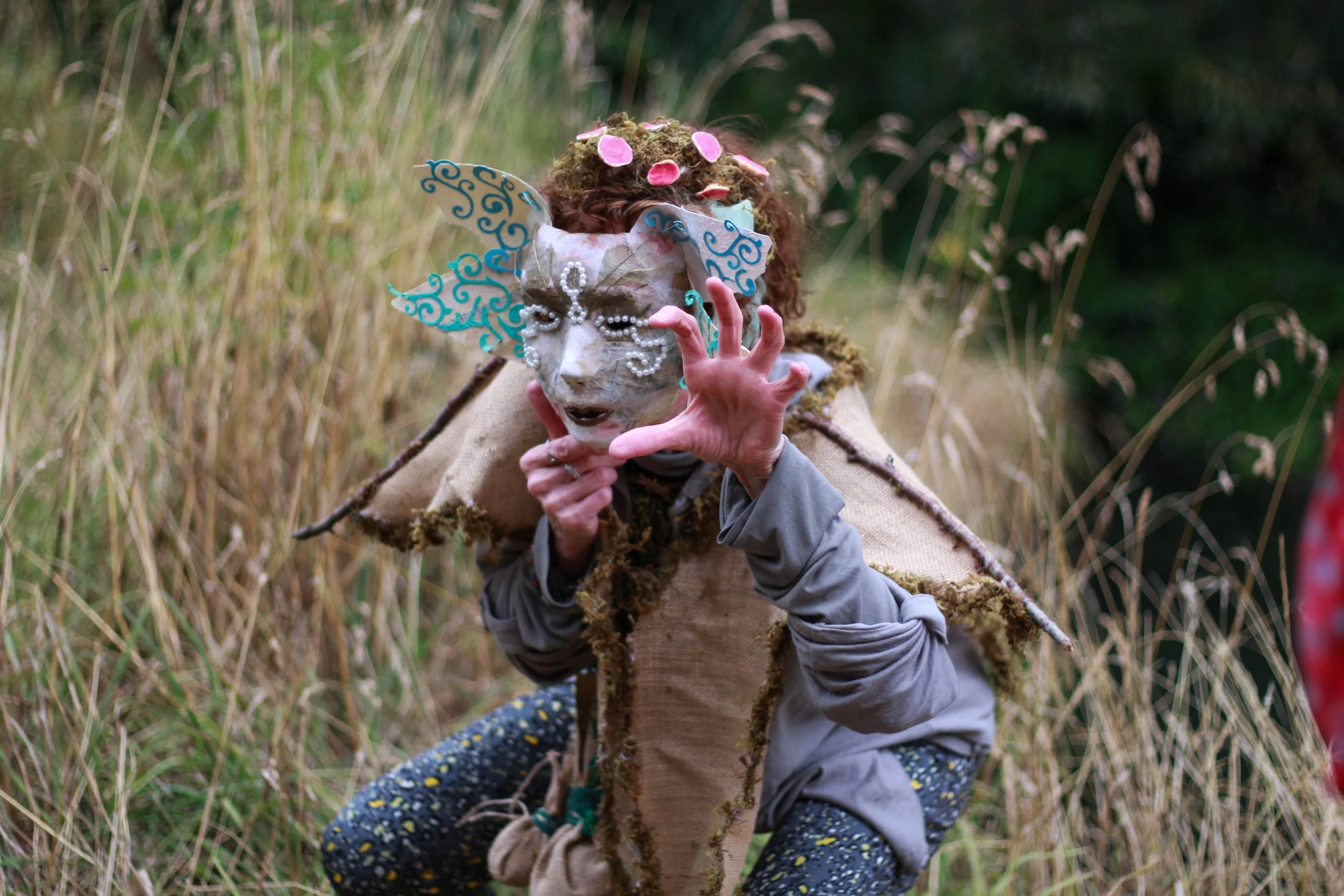
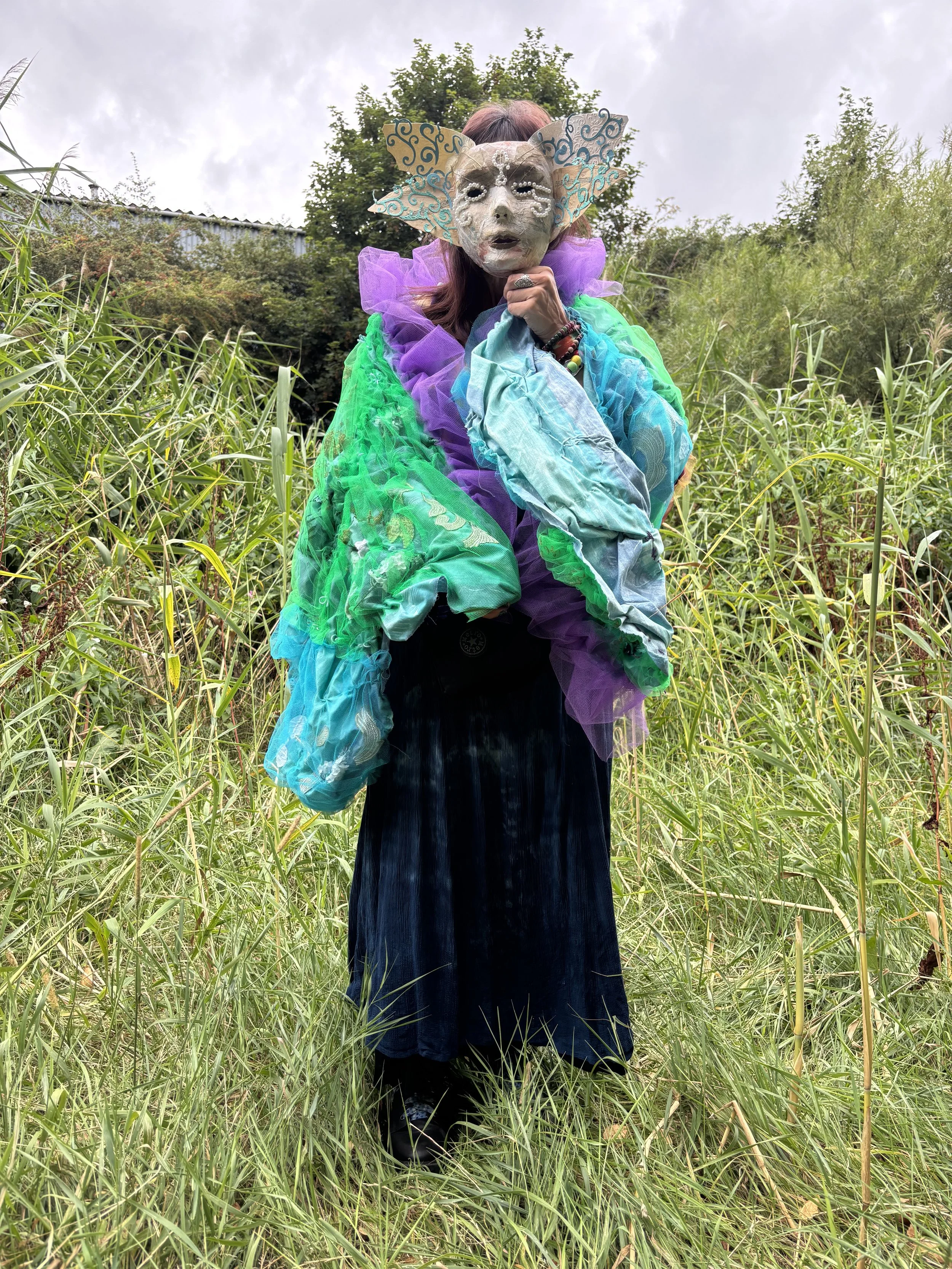
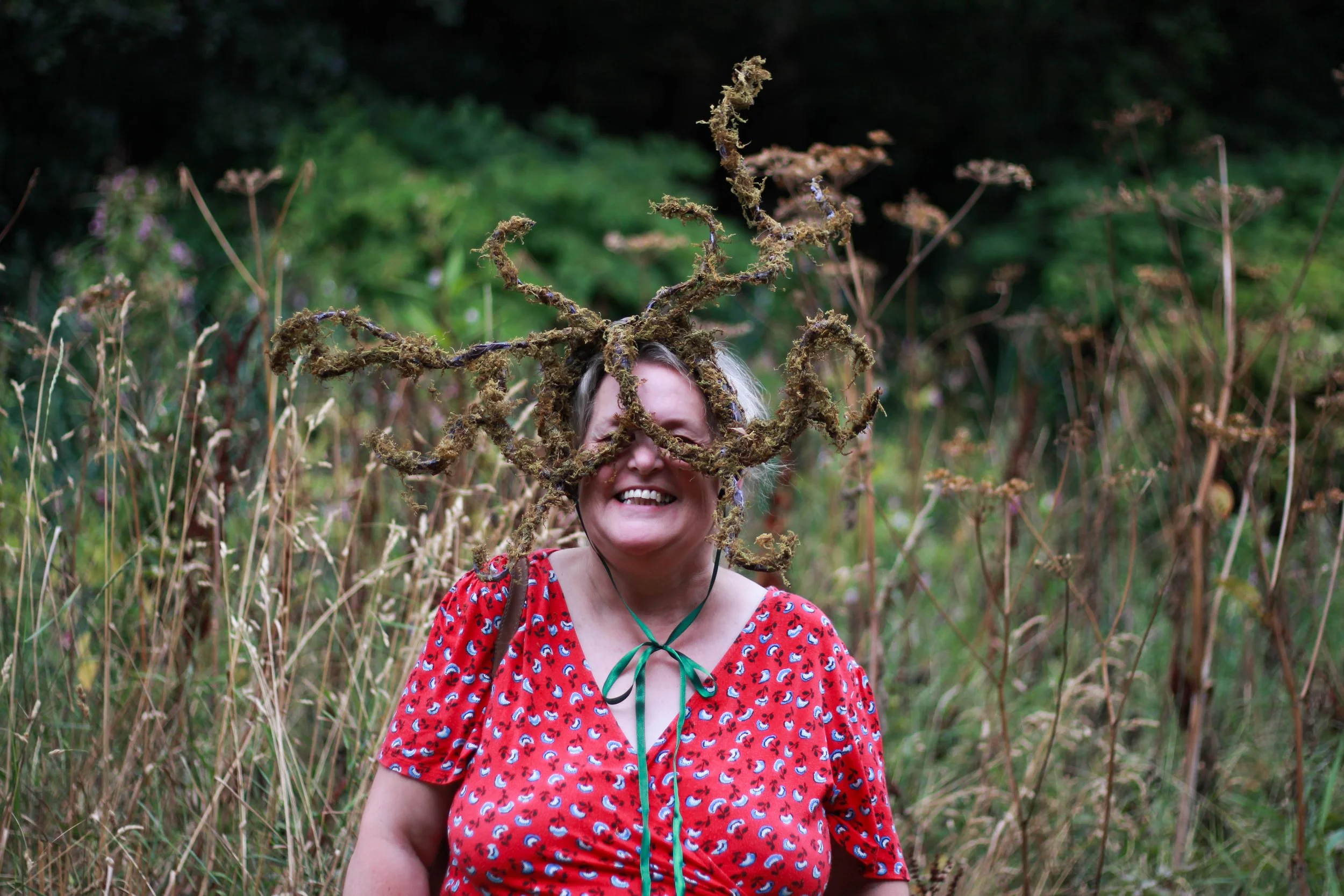
Having made props and costume related to the story of transformation the group headed to the River Trent accessible from Stoke (off Campbell Road) to take some photographs as the River Cryptid version of themselves (and surprising a few dog walkers and dogs along the way!).
Objects to look out for in the investigator’s desk!
An Antique Pack Horse Bell - The Essex Bridge is the longest remaining packhorse bridge in England. Built in the 16th Century and Grade 1 listed. It crosses the River Trent near Great Haywood, approx 100m downstream from where the Trent meets the River Sow. Perhaps one of the many thousands of horses that crossed the bridge carrying lost a bell in the river below that wound up in the Grebe’s nest!
A piece of Flint — from one of the many mills grinding flint to be found along the tributaries of the Trent. A key ingredient in the pottery industry of the area. “The Trent is joined at Stone by a small stream flowing from a moated site at Hartwell Hall which in its four miles once drove half-a-dozen mills.
It is not unusual to find mills or their remains dotted at intervals along the tiny tributaries of the Trent, for water-power has since medieval times ben used to turn grinding stones… What makes this stream different…is the fact that the mills belong to a relatively modern times and were established to grind not corn but flint, the ingredient necessary to prevent the glaze on earthenware from cracking” Extract from ‘Portrait of the River Trent by Peter Lord
Pieces of old leather shoes — from Stafford’s famous shoe and boot industry
“…its major industry is concerned… with leather, more generally associated with Northamptonshire and Leicestershire yet clearly not out of place in the Trent valley area, which has provided rich grazing for cattle from time beyond record. Stafford has been famous for boots and shoes for hundreds of years, and in the eighteenth century the poet Richard Brinsley Sheridan-who used to stay at Chetwynd House, later to become Stafford post office-wrote: "May its trade be trod under foot by al the world." Extract from ‘Portrait of the River Trent by Peter Lord
Vintage Postcard of Victoria Park, Stafford, perhaps lost in the River Sow that runs through the park
The park in Stafford was originally opened in 1908 as Victoria Park, then known as the Victoria Park Pleasure Grounds. Stafford’s river is the River Sow (a tributary of the Trent) which flows through Victoria Park. Stafford grew as a market town and a hub for local trade partly because of the river!
Message on back of the postcard - inspired by workshop conversations about the sensory and seasonal aspects of the river/nature. As well as thoughts on anchoring and sharing nature with loved ones, and for wellbeing “healing”
Holly Johnson and Stoke-On-Trent based groups
Stories of transformation, piecing together clues in the case of the Trent Cryptid
Artist Holly Johnson - inspired by folklore stories of transformation wanted to explore how we might devise a new story of transformation for the River Trent.
Holly has been working with the Stoke based ArtsHill performers group and members of the public to devise a new folklore around the River Trent, exploring themes around identity, transformation, and how our personal traits could become magical, physical forms.
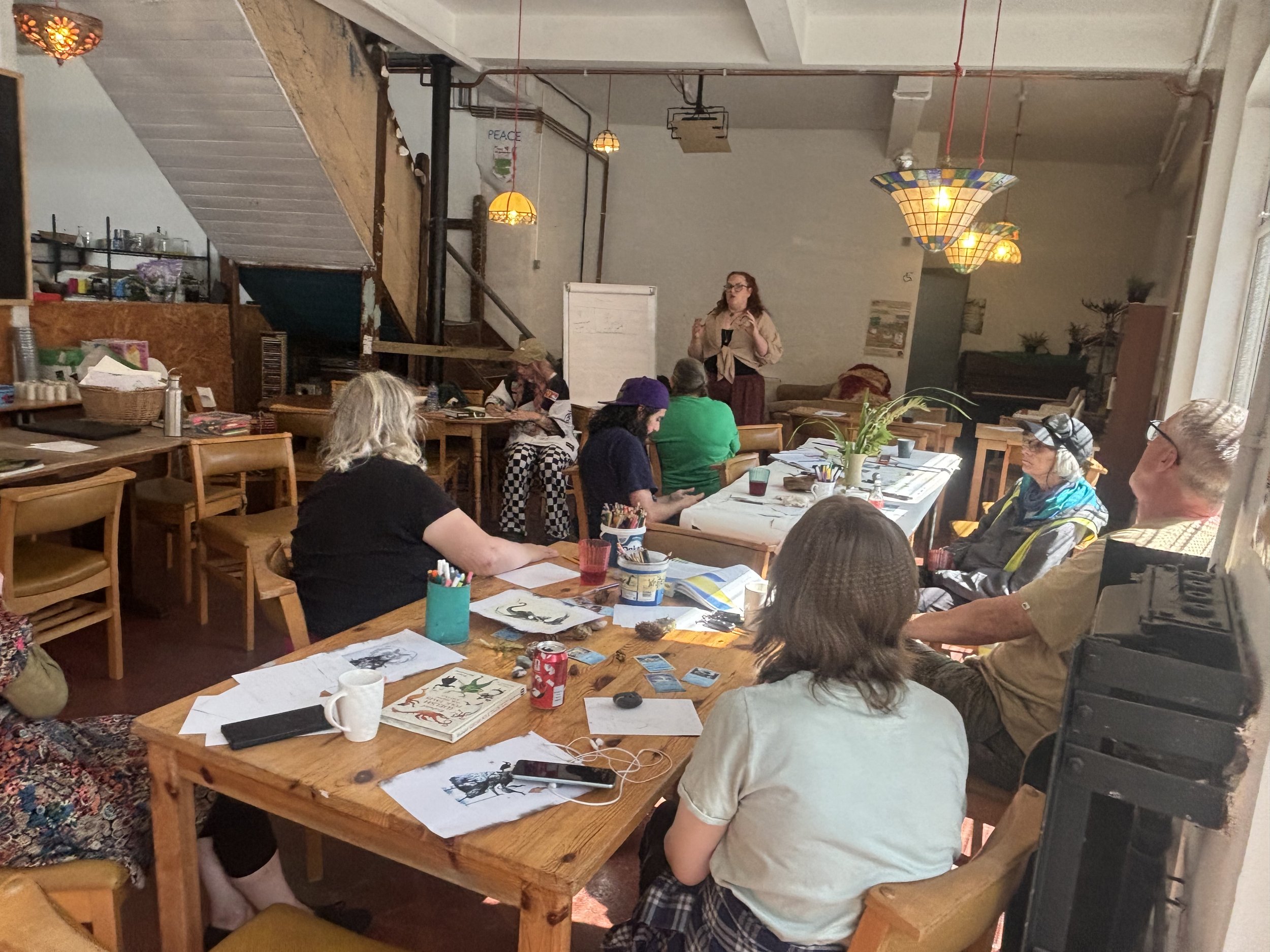
In the first session Holly and the group were joined by story teller Julie Moss. Together Holly and Julie worked with the group to explore how our personalities, experiences and qualities could be represented by characteristics from the river ecosystem. Thinking about the ways in which folklore and mythical characters magical abilities and physical traits tell us specific things about our relationship to the natural world and its cycles, giving us freedom to explore different ways of connecting to ourselves and our surroundings.
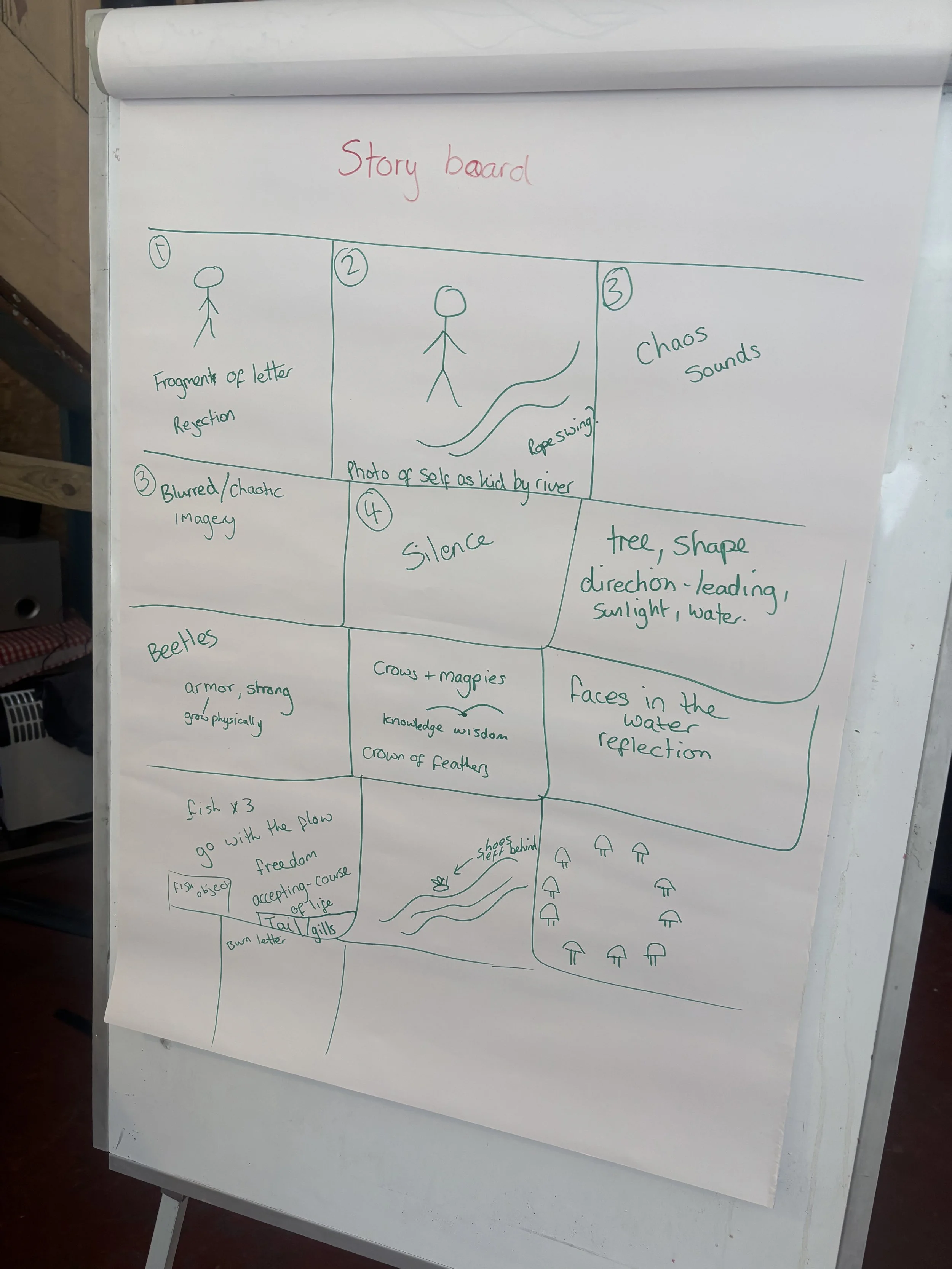
They then created a story board for a character experiencing a new folklore tale walking down the river to escape the mundane every day, and how this freedom transforms them.
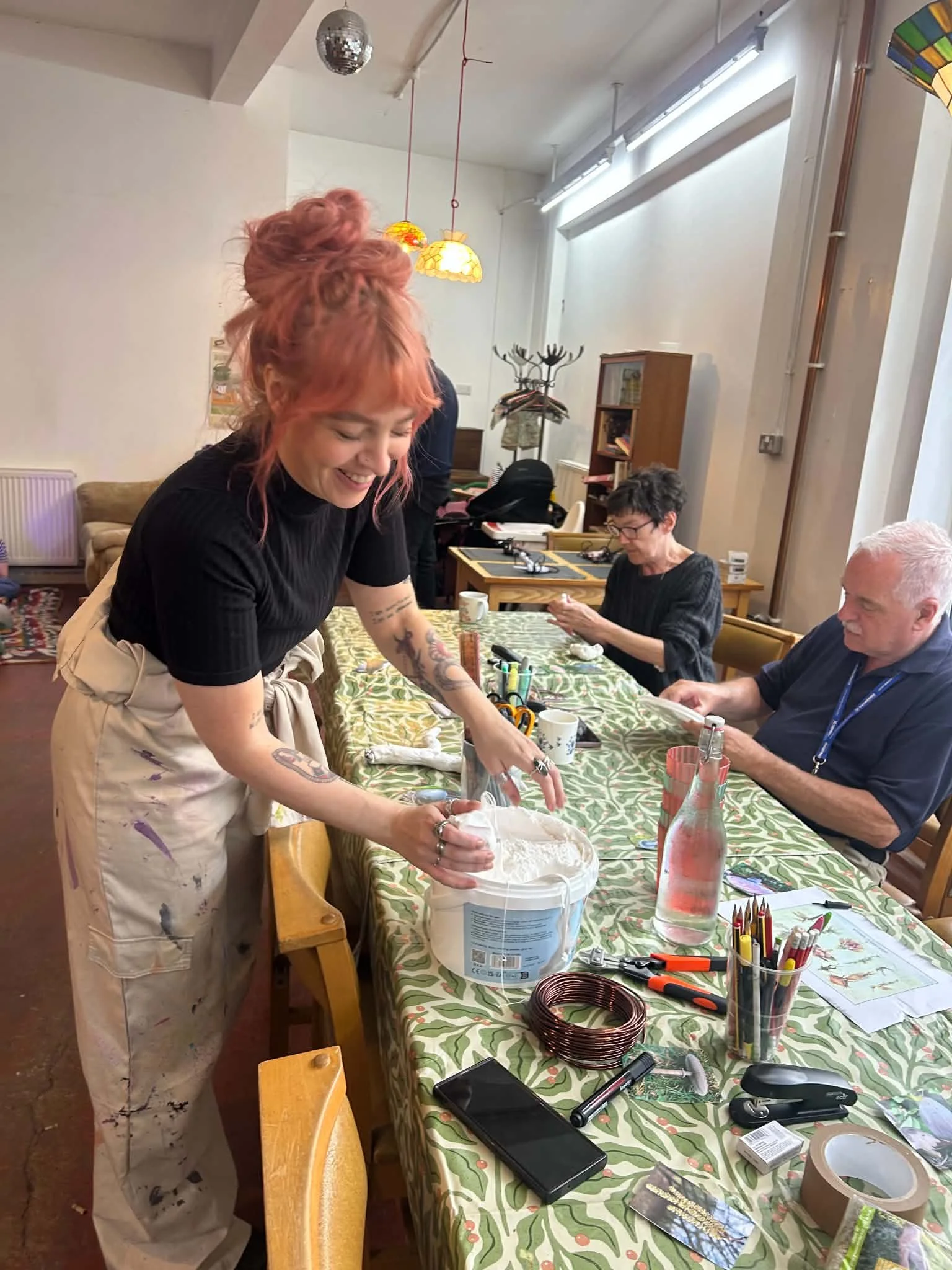
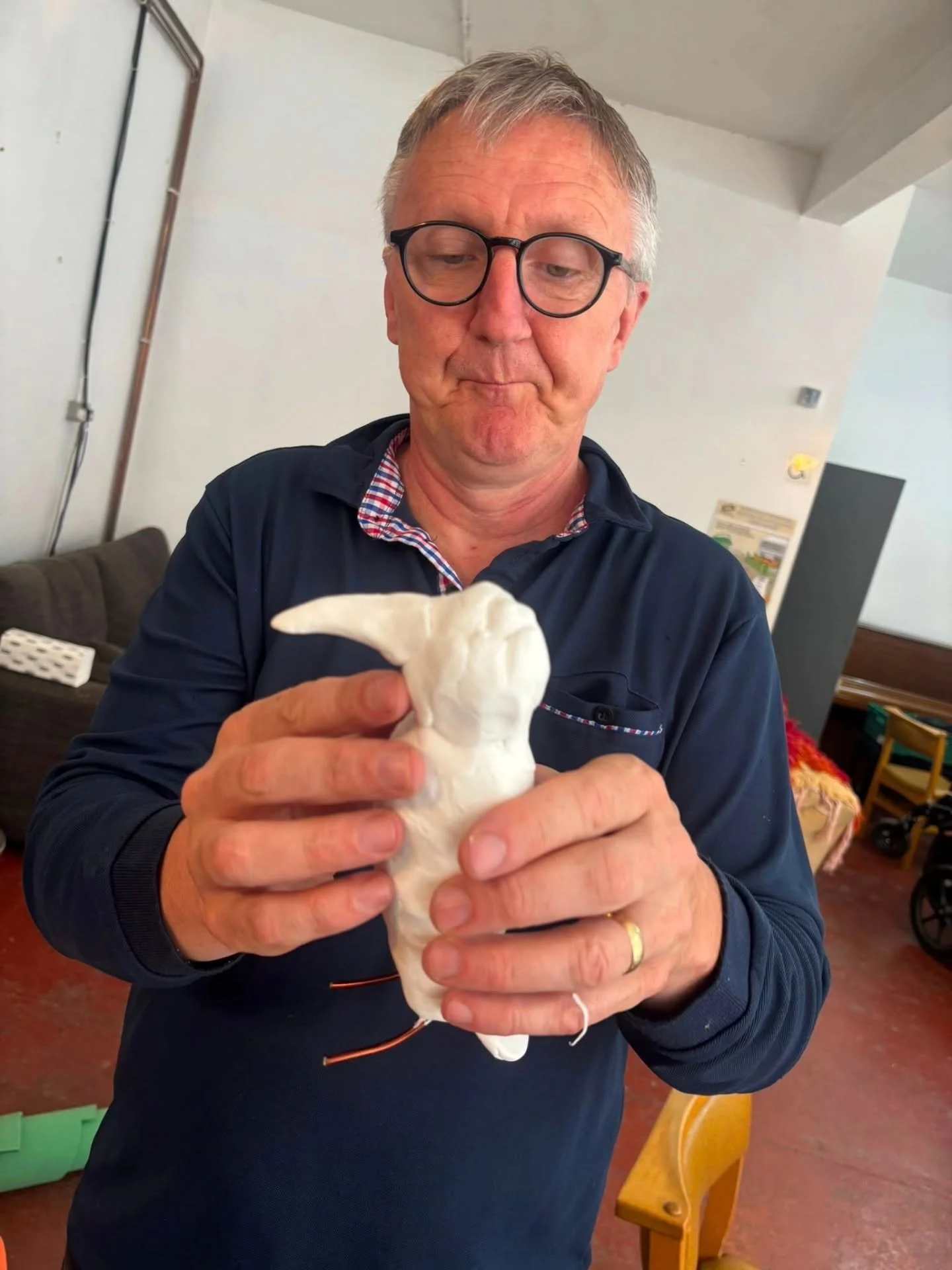
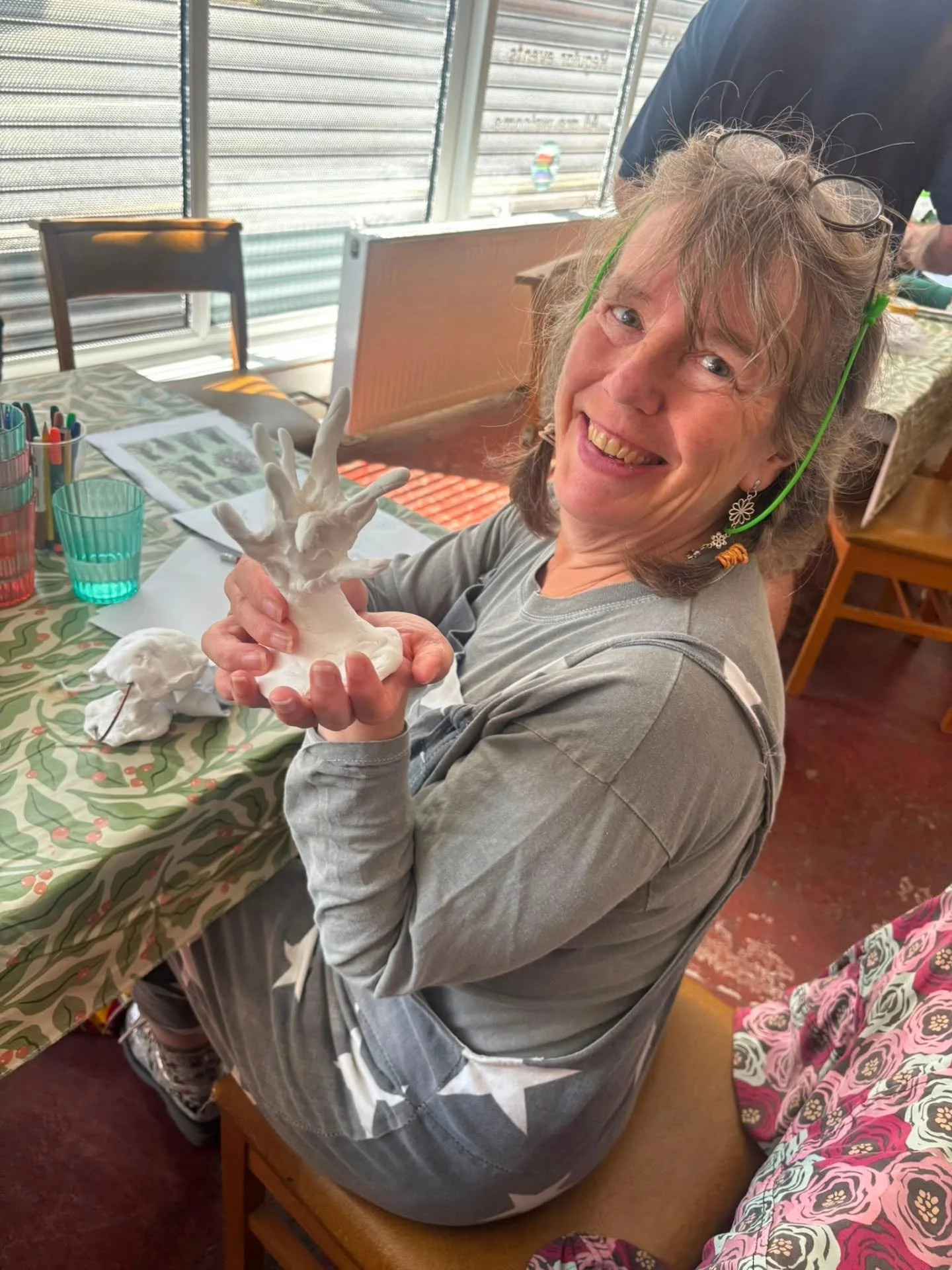
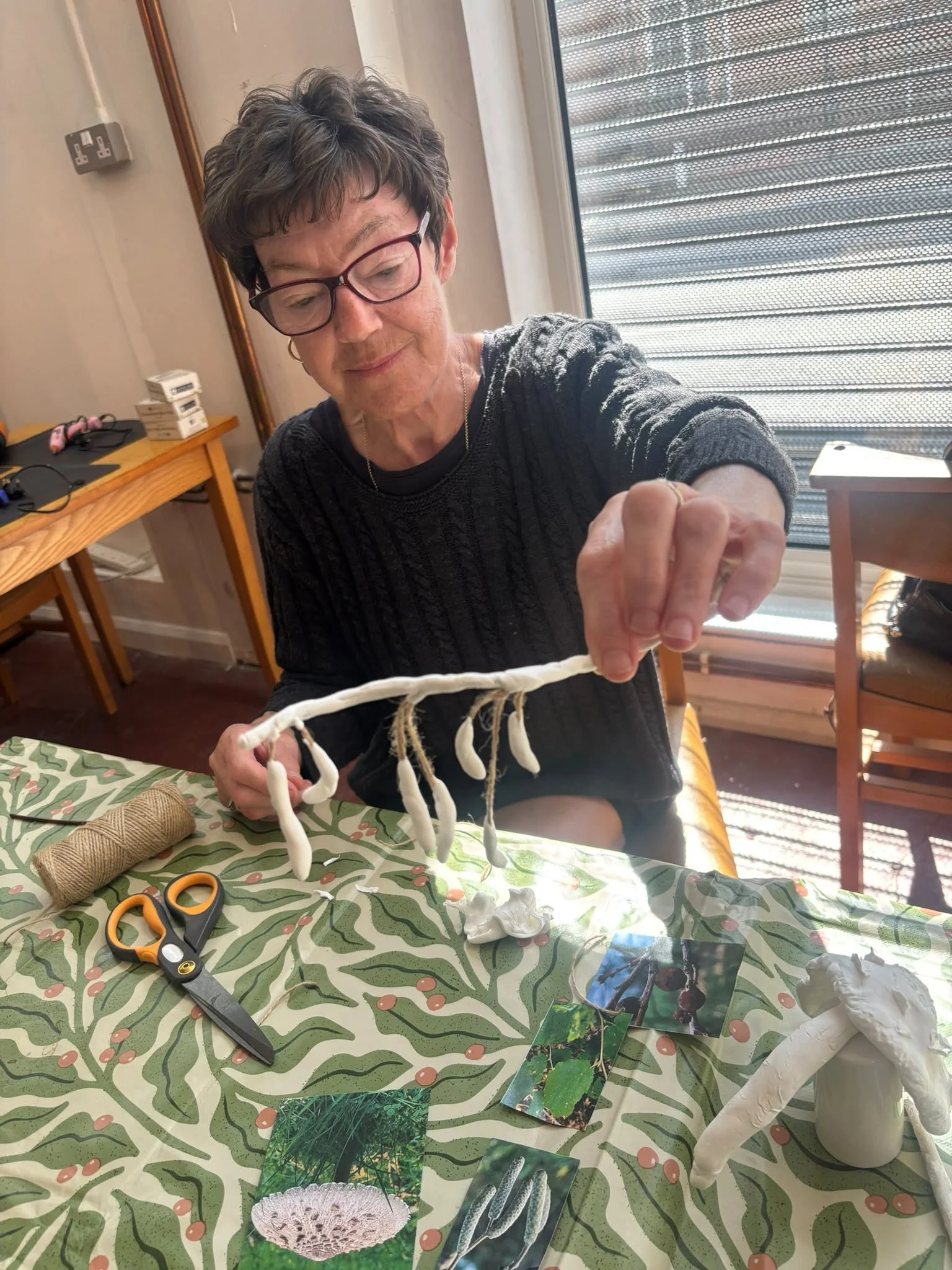
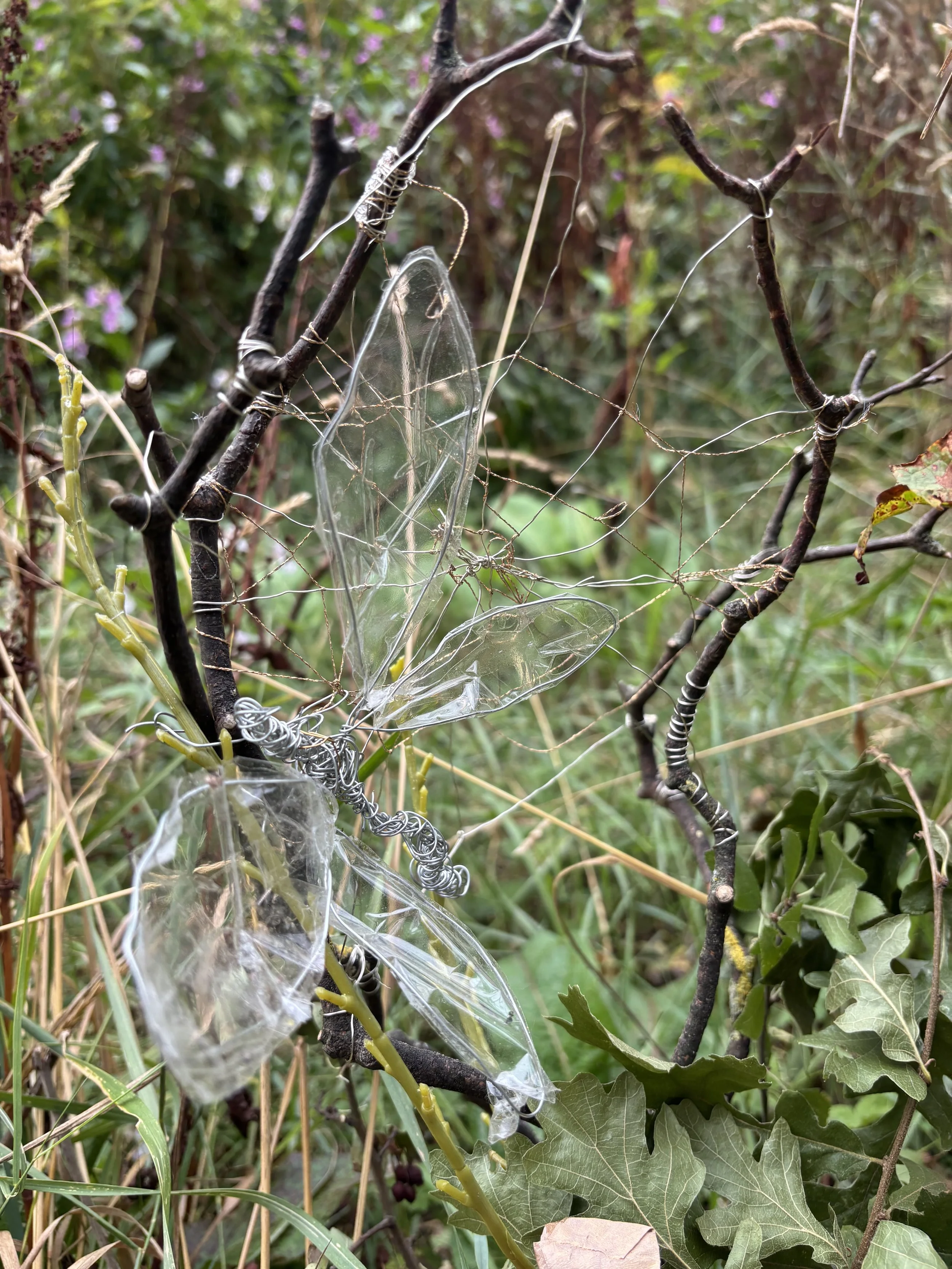
In the next two sessions Holly was joined by fellow costume maker Eve Travis, together they worked with the group to create props and costume pieces from foam clay, wire and fabrics to represent parts of the story, mysterious things their character may stumble across, and the River Cryptid that their character may become.
Transforming into Cryptids for a River-side photoshoot!
This project has been commissioned by Staffordshire Wildlife Trust, as part of the Trent Valley Past and Present Project. It is made possible with The National Lottery Heritage Fund, with thanks to National Lottery players.
Find out more about the wider project here: https://www.thetrentvalley.org.uk/projects/tvpp/